
A Courageous Vision
Gary Williamson
With their striking, high-contrast monochrome street scenes, impactful foregrounds and mysteriously silhouetted figures, Gary Williamson’s photos are nothing if not powerful – and even more so when you learn that he is registered blind.
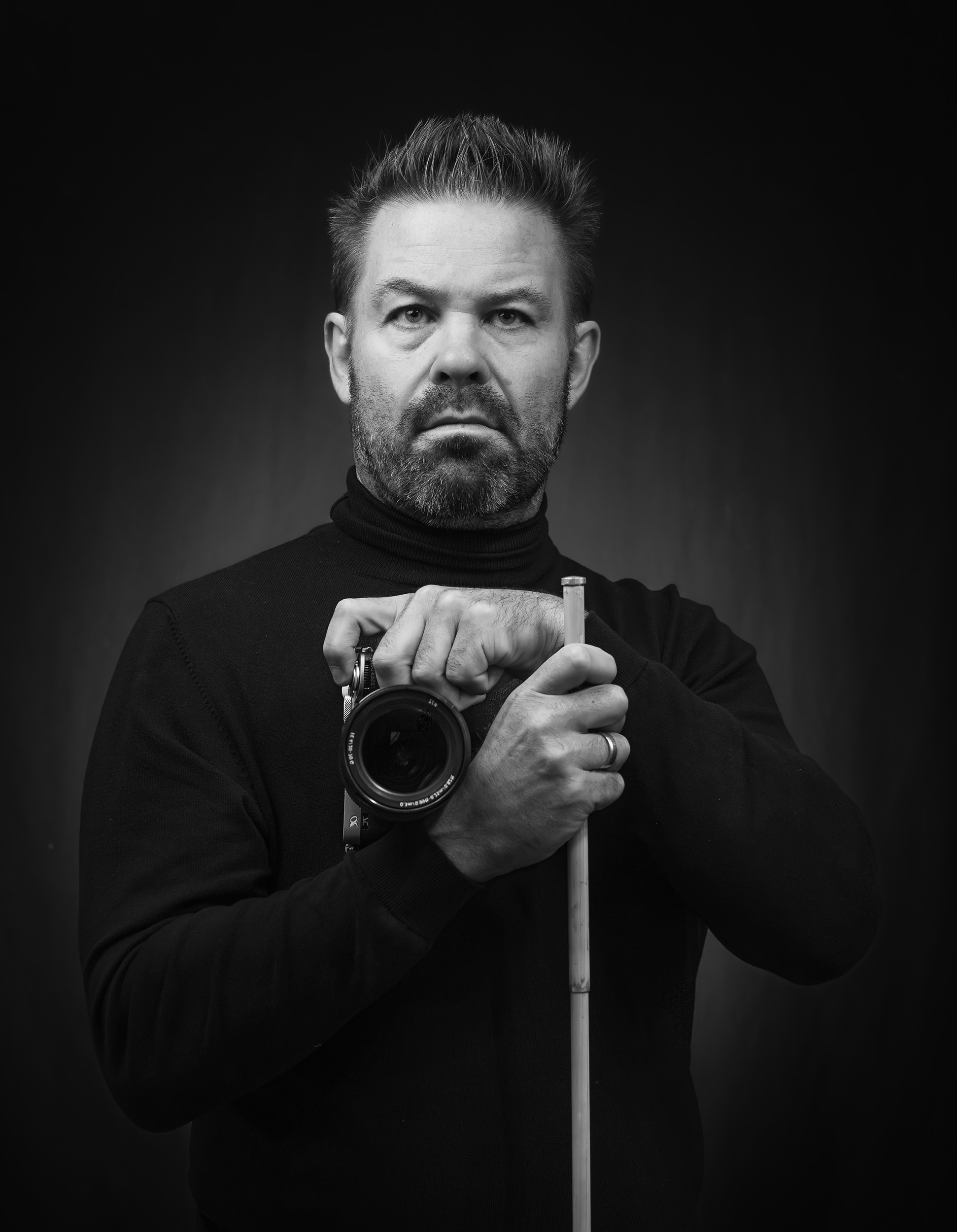 © Gary Williamson | Sony α7C II + FE 20-70mm f/4 G | 1/80s @ f/6.3, ISO 1000
But maybe this shouldn’t be surprising, because, as Gary reveals, many of the techniques he uses to overcome his loss of vision in everyday life, are identical to those which drive successful photography. Inevitably, though, the first question is ‘how’? How can someone work in a visual medium without the benefit of what most would call full eyesight?
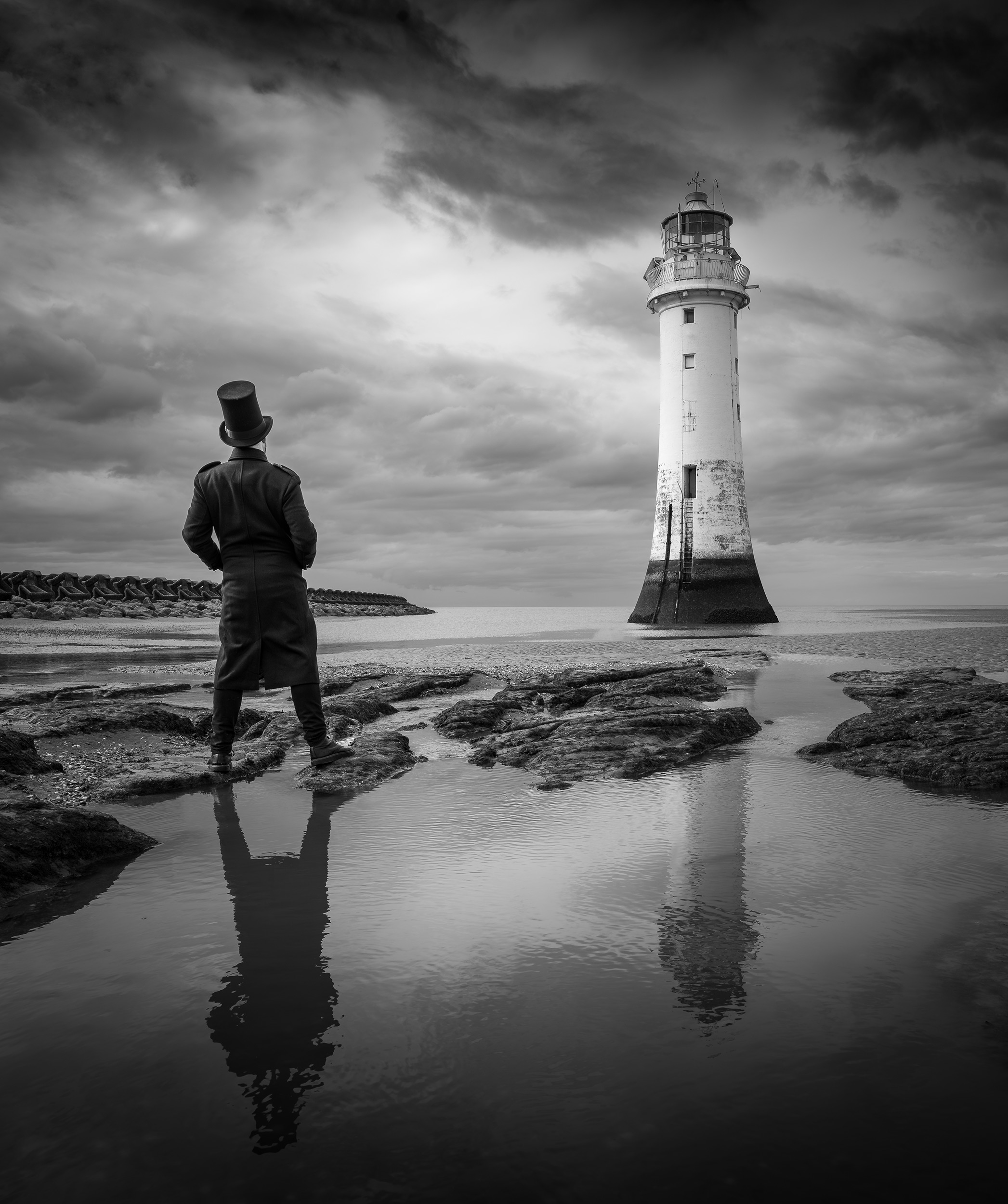 © Gary Williamson | Sony α7C II + FE 16-25mm f/2.8 G | 1/125s @ f/11, ISO 100
“Of course, I get asked that a lot,” Gary begins, “and I understand the confusion, but the question cuts directly to one of my missions in photography. People think blindness is seeing nothing at all, but human sight has many levels. It’s a huge spectrum, and while my vision is blurred to the point that identifying some things is almost impossible, there are still things I can see and ways I can record the world around me. My unique way of seeing has enhanced my creativity, and in that way, I want to reframe my ‘disability’ as a ‘different ability’.”
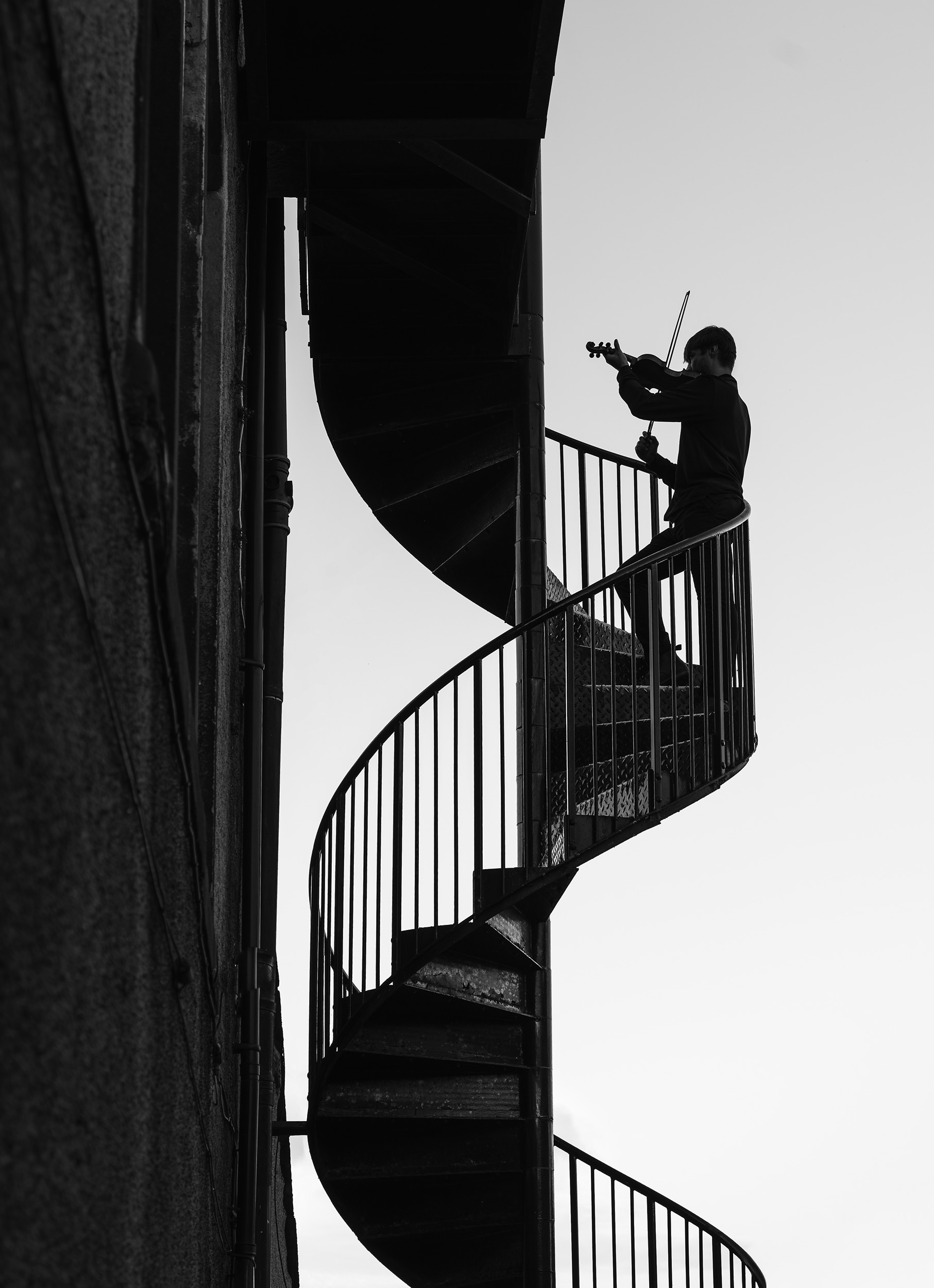 © Gary Williamson | Sony α7C II + FE 20-70mm f/4 G | 1/250s @ f/5.6, ISO 100
“For me, contrast is vital,” he explains, “and the more there is, the better I can see. For instance, I might be able to walk up a set of steps more easily than down them if the light is in the right place. The shadows and highlights help me judge depth and height. And while if I’m looking into the sun, I can see almost nothing, when I turn my back to it, it’s much better. My sight depends on light and shadow and so I look for those ingredients on the camera’s screen to make my images successful, too.”
Gary shoots predominantly at a wide angle “because my level of vision deteriorates quickly with increased distance,” he says. “I can see elements of the foreground better than those far off, and that means I’m interested in what’s around my feet. I often work out images from there, which of course is another strong compositional technique in photography. I’m not going to be inspired by a distant tree, because I probably can’t see it at all! But roads, kerbs, steps or patterns…”
“... those lead-in lines and frames are what I’m after,” Gary continues. “Then I look for some contrast in the distance, like a bright sky, a doorway, or the end of a tunnel, and if it’s in a street photography context, I wait for a figure to pass through that. Other times, I’ll set up the same way, but make a self-portrait, or ask someone to pose in the right place.”
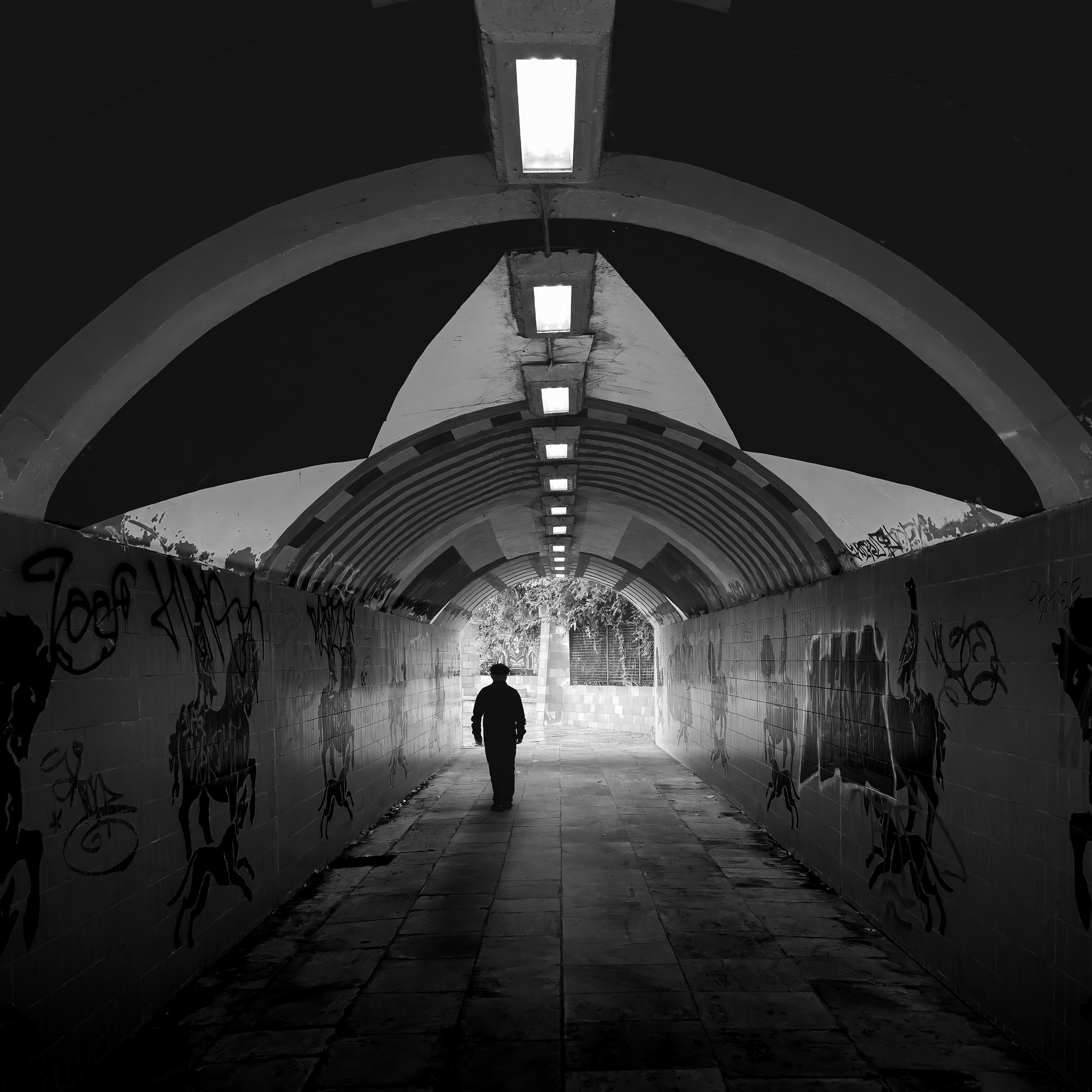 © Gary Williamson | Sony α7C II + FE 24-50mm f/2.8 G | 1/125s @ f/5.6, ISO 1600
For other types of images, Gary relies on his hearing to pick out opportunities. “Because my other senses have become so much more important to my daily life, I’ve found they help me photographically, too,” he explains. “For instance, fully sighted people often find their vision dominates the other senses, but I’ll often hear an opportunity rather than seeing it, like a musician playing on the street, or someone talking on their phone, which will make a good shot. And when I’m close by I’ll look for the contrast again.”
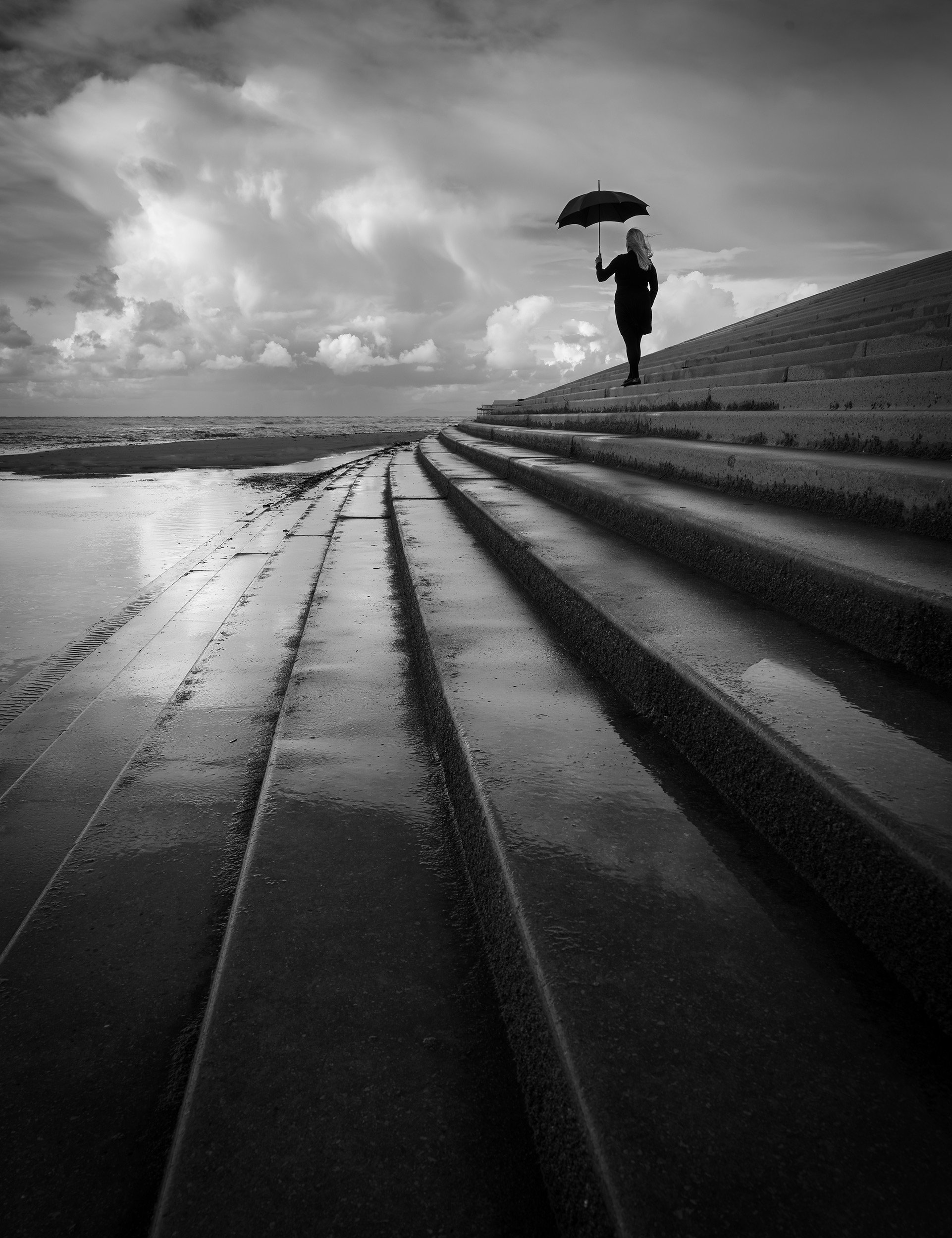 © Gary Williamson | Sony α7C II + FE 16-25mm f/2.8 G | 1/400s @ f/11, ISO 160
Adaptability and courage have long been part of Gary’s story. Backpacking around Europe in the 1990s, a hereditary optic nerve condition appeared almost overnight, meaning he had to find his way home from Gibraltar without the ability to see or read a map. But the adversity was formative. “My narrative has always been not to look at what’s lost but what’s possible,” he says. “I’ve never dwelt on my loss of sight and always thought about how to push myself to achieve something within my power. You either deal with it, or you don’t, but dwelling on it can drag you down. And I thought, if I make that trip at 18 in those circumstances, I can do anything.”
While he had studied film photography at art college prior to losing his sight, it wasn’t until digital cameras became more adept at assisting partially sighted users that Gary was energised by picture taking again. “Back then, I was fascinated by the way a single frame can tell a story, evoke an emotion or place a question in the viewer’s mind,” he remembers, “but using film cameras wasn’t really an option for me after my condition appeared, so instead I used pastels and charcoal to depict the world as I saw it. The latter is where the idea of working in black and white came from, and why it still appeals to me.”
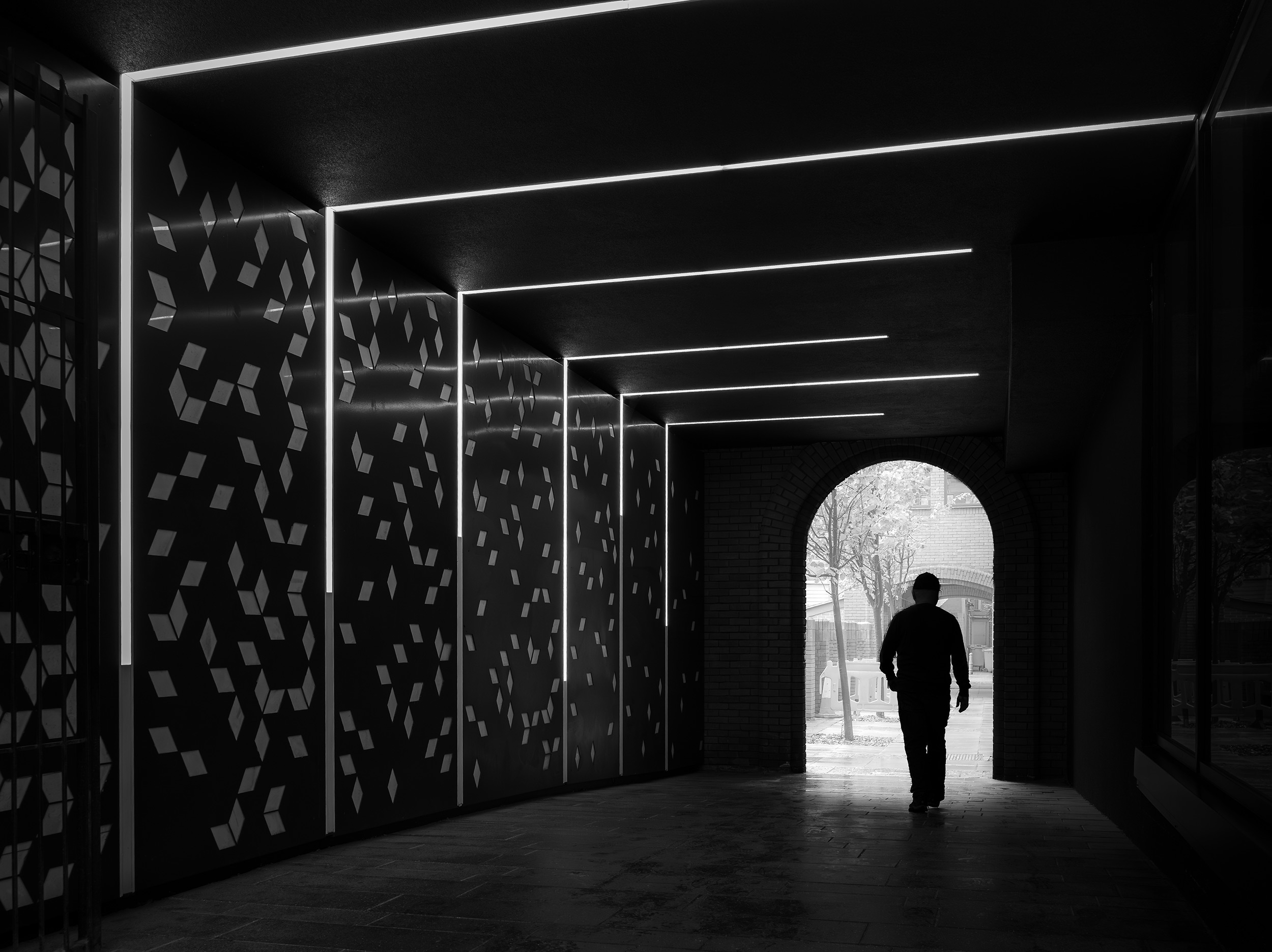 © Gary Williamson | Sony α7C II + FE 24-50mm f/2.8 G | 1/125s @ f/5.6, ISO 1600
Cameras in the latest Sony Alpha lineup are designed with adaptation in mind, and as part of Sony’s contribution to World Sight Day, Gary has been using a Sony Alpha 7C II along with FE 16-25mm f/2.8 G, FE 24-50mm f/2.8 G, and FE 20-70mm f/4 G lenses. The camera includes multiple accessibility aids for partially sighted photographers along with regular features that become even more important when vision is impaired.
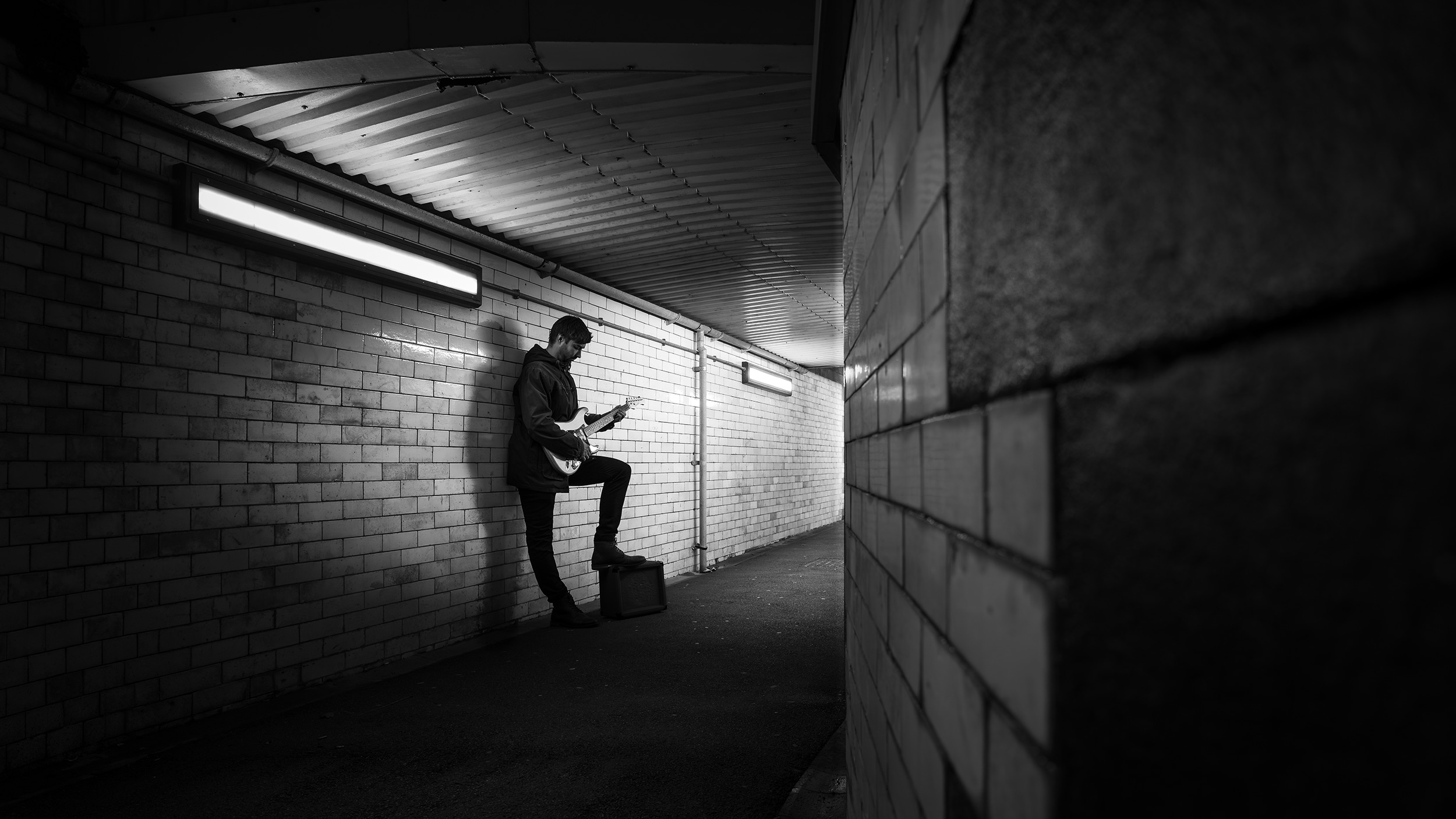 © Gary Williamson | Sony α7C II + FE 20-70mm f/4 G | 1/100s @ f/4.0, ISO 400
“The most surprising thing to me was the effectiveness of the Alpha 7C II’s screen reader function,” Gary reports. “I’d never worked with that camera before, but the reader meant I was comfortable with it inside a day. I’m used to using voice functions on things like my tablet or phone, and like using your other senses on the street, it helps build a picture of the camera’s function in your mind.”
“It does everything from reporting the basic settings – shutter speed, aperture, ISO, the focus mode and so on – to telling me how specific functions like the intervalometer I use for self-portraits is setup. That’s brilliant from a technical point of view, but it also has a positive effect on my shooting experience. A talking camera makes it clear to passersby that I’m visually impaired, but if I’m using my 20x magnifier with my face pressed up to the screen, it can draw unwanted attention. Someone once asked why I was sniffing the camera! The reader makes me less anxious about interactions in busy areas.”
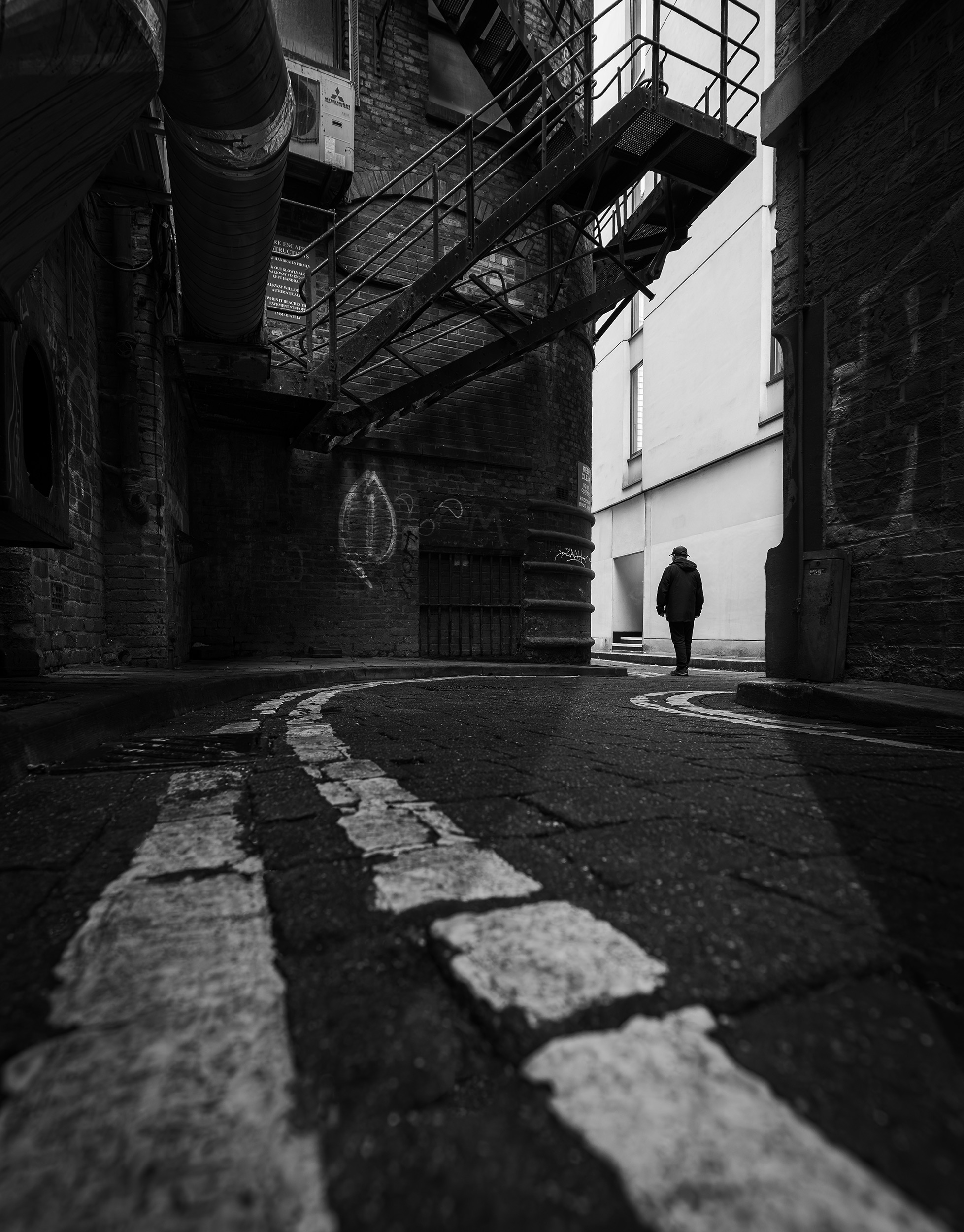 © Gary Williamson | Sony α7C II + FE 16-25mm f/2.8 G | 1/100s @ f/4.0, ISO 1600
Gary also praised the Alpha 7C II’s layout and handling. “I can use it one-handed, which is a benefit, and the dials and inputs are also very well designed. Sighted photographers benefit from knowing one button from another by touch – meaning they don’t need to take their attention from the viewfinder – but for me it’s even more important. Even having dials that make a firm click helps, so you know you’ve pushed them far enough.”
A benefit to all photographers, Gary also loved the Alpha 7C II’s superb autofocus. “It’s something you can really trust to lock on and give the sharpest focus,” he says, “and the touch tracking is particularly useful for me. With enough contrast, I can notice a figure on screen, touch them and know the camera is going to follow them perfectly while I shoot.”
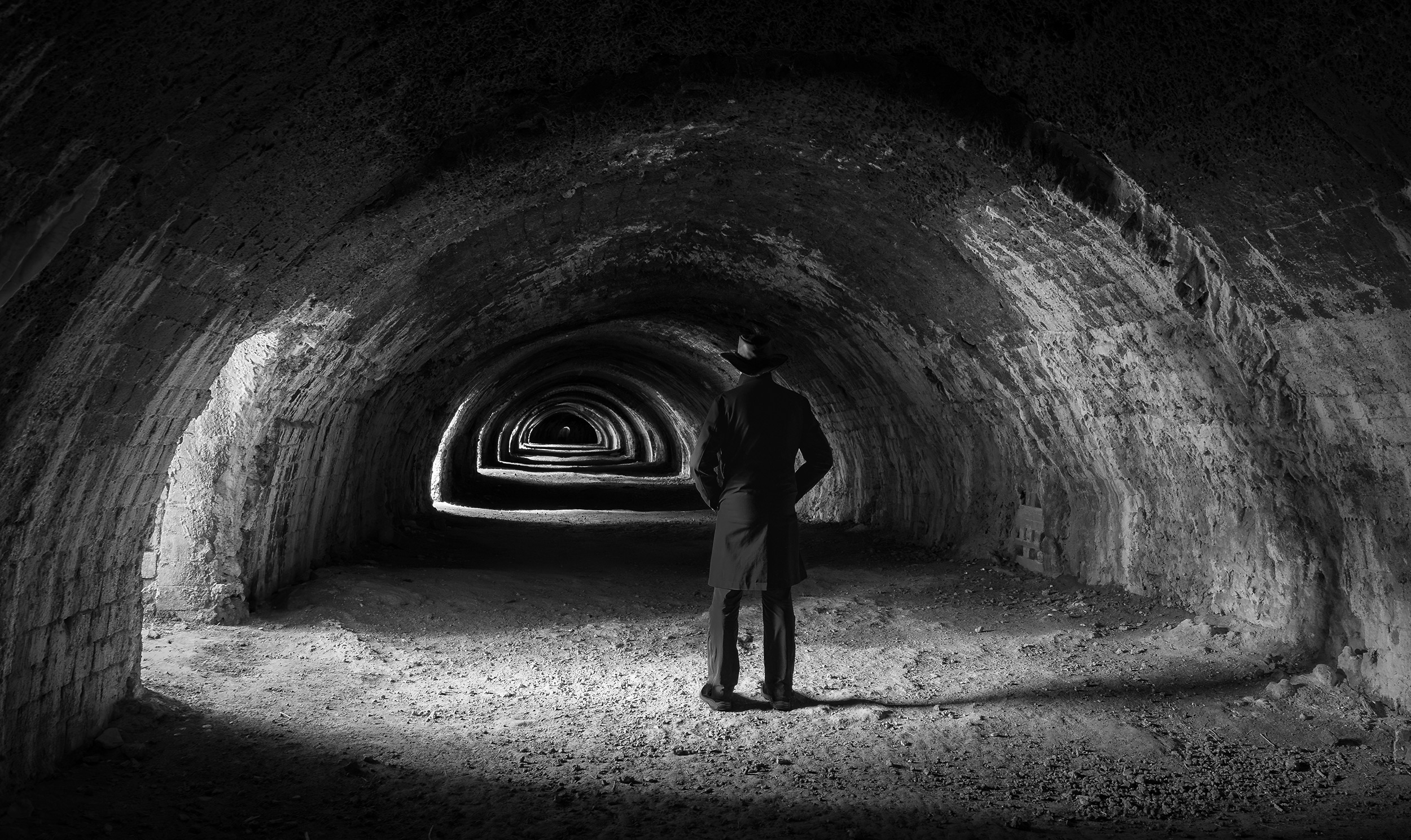 © Gary Williamson | Sony α7C II + FE 16-25mm f/2.8 G | 0.4s @ f/5.6, ISO 1600
With my photography, I’m trying not to look at what’s lost, but at what’s possible. I have a unique perspective of living with visual impairment, and that lets me challenge stereotypes and nurture a deeper appreciation of all forms of sight. Disability is about barriers, and we need to break them down where we can. Accessibility functions, like those I used on the Alpha 7C II are a big part of that. This camera makes a lot of things possible.”


