
Filming Fnatic with Sony Cameras
Pete Nguyen
“We take a lot of inspiration from traditional sports like Football and basketball,” says Pete Nguyen, Senior Content Strategist at Fnatic. With over 700k subscribers and 1000 videos on YouTube, Fnatic is fast becoming one of the world's leading eSports teams, competing in events worldwide. From ideation through to post-production, Pete oversees a wide variety of video content for Fnatic, and he aims to produce content with a production quality as good as broadcast sports media.
“Traditional sports have massive budgets that are still out of reach for us in esports. Despite this, we can have similar production levels at a fraction of the cost thanks to Sony cameras.” Pete and the team at Fnatic exclusively use Sony cameras, lenses and microphones, with the Sony FX3 and Alpha 7S III cameras providing the day-to-day workhorses. “The cameras are cinema-grade quality, but at a cost we can afford.”
But it isn't just the image quality; the smaller size and built-in SteadyShot stabilisation give Pete and his team the ability to document every aspect of an esports team. “We follow the team through their tournaments, capturing the emotions of victory and defeat, and all the work that they put in outside of the games as well,” says Pete.
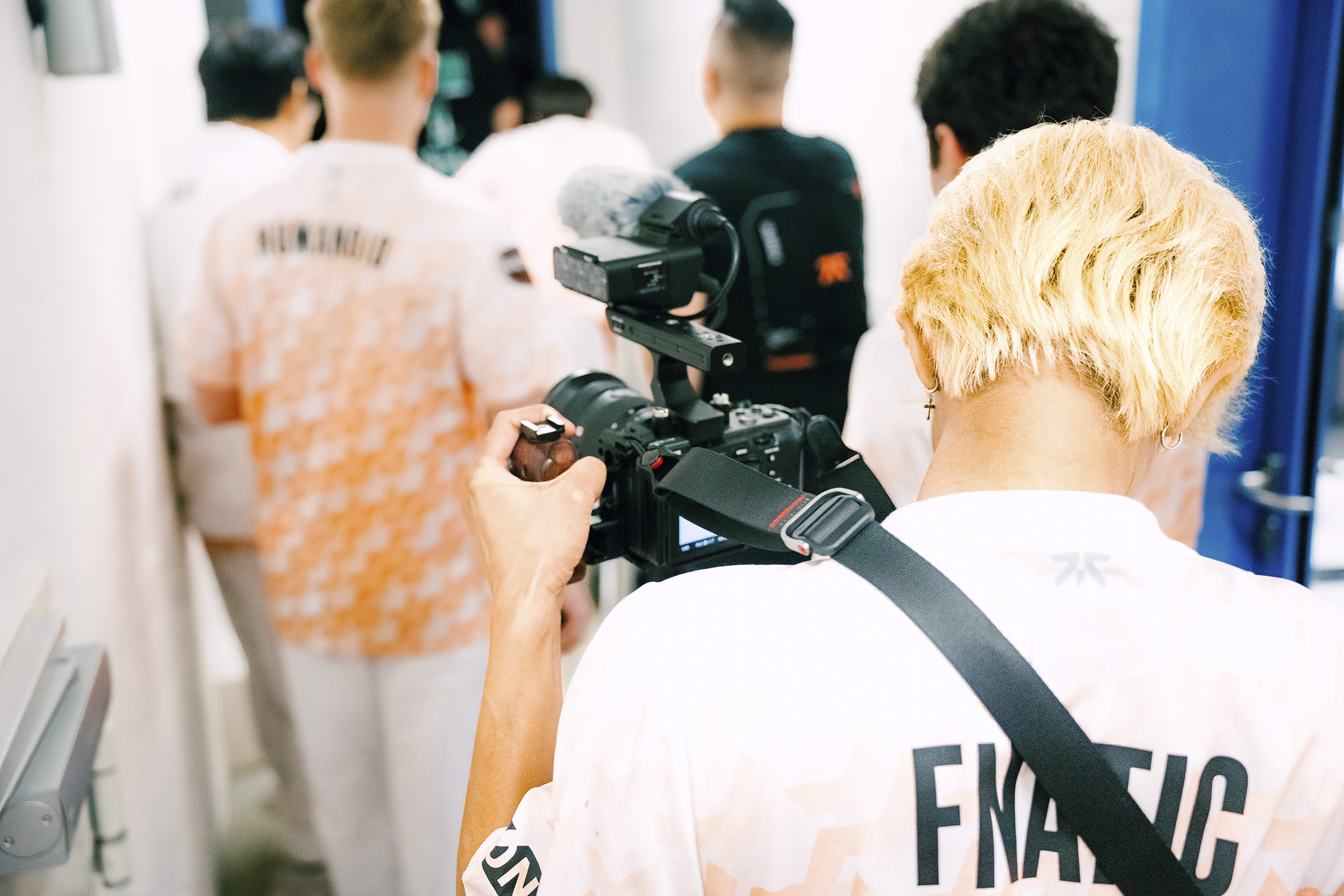
“Documentaries are the most challenging style of video to capture. You have to be able to recognise that something important or usable is happening and quickly start recording. Quite often, we shoot backstage at esports arenas where there’s little light, but the FX3 and Alpha 7S III can shoot at high ISOs with minimal noise. I see these cameras as rock-solid and reliable. In our fast-paced, stressful working environment, we love that these Sony cameras are easy to pick up and shoot with.”
Working with brand partners, Pete and his team also use the Sony FX6. “These videos are heavily planned and pre-produced, and the production is much higher in terms of lighting and audio. We’ve used Sony cameras to produce adverts for BMW and Gucci featuring our players. This shows how serious esports is and lends even more legitimacy to esports as a whole.”
Pete's background as a journalist has allowed him to develop personal stories about the players on the Fnatic team. Lens choice plays a vital part in the storytelling process, and Pete spends time considering which lens will be best suited for particular shots.

“There are many instances in our productions where the lens had a big impact on the final result. One video required a more quirky, fun look that only a wide-angle lens could provide. Another example is when we wanted to get extreme close-ups of the players’ eyes so we could see the reflections on them. We chose the Sony FE 90 mm f/2.8 Macro G OSS for this as it allowed us to get super close to the eye with its impressively short minimum focusing distance.”
However, not all of Pete's lens choices are so extreme, with the Sony FE 24-70mm f/2.8 GM II being the go-to lens of the Fnatic team.
This is our workhorse,” he says. “It is such a versatile and, importantly, lightweight lens. I can shoot anywhere from 24mm to 70mm, knowing that it is ultra-sharp, and the f/2.8 aperture allows us to shoot in low-light conditions. It also gives us that shallow depth of field, cinematic look that you can only get from a large aperture and full-frame camera combination.”
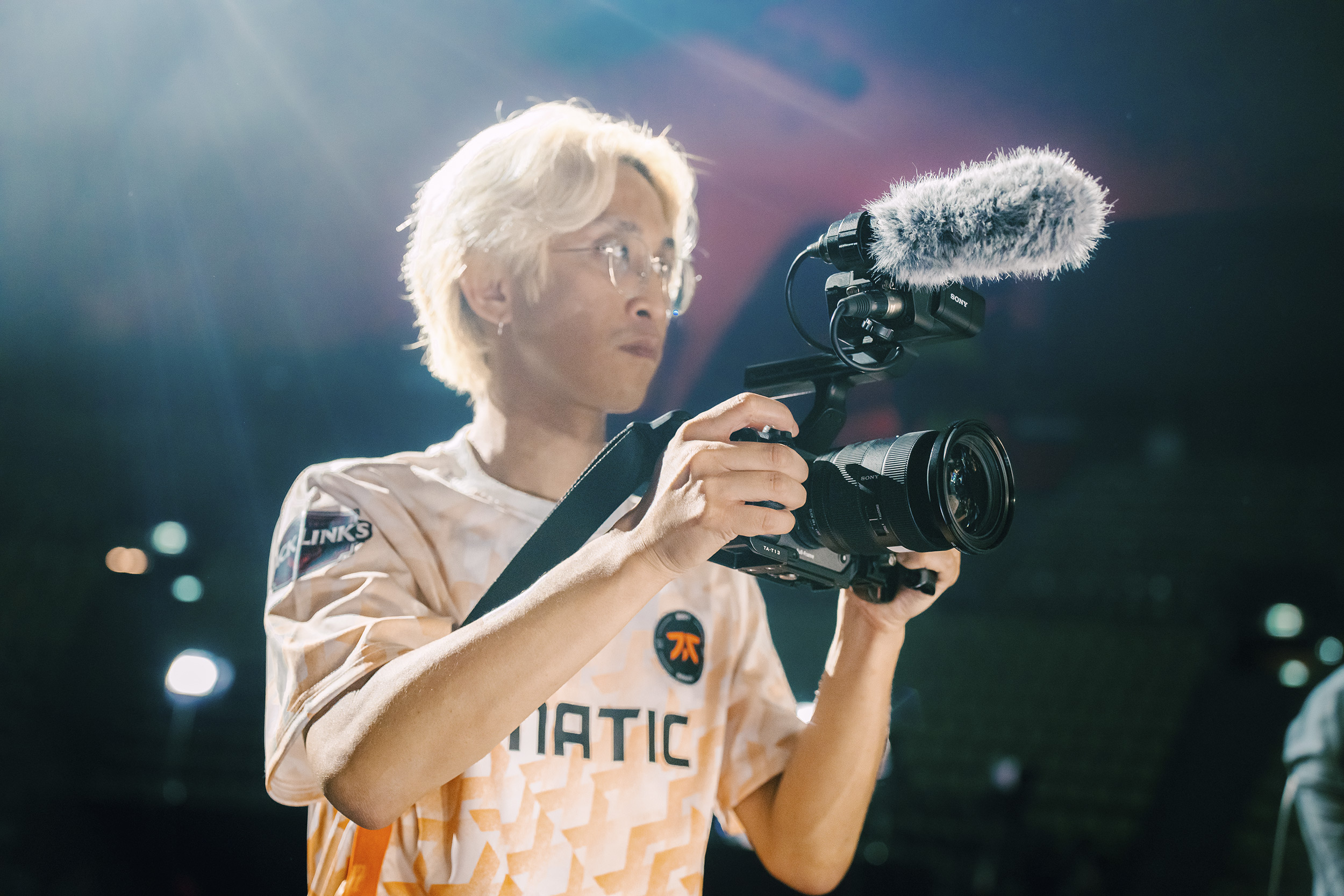
Along with the 24-70mm lens, Pete also uses the Sony FE 16-35mm f/2.8 GM II. “It's a wonderful ultra-wide-angle lens for establishing shots,” he says. Finally, when image quality and production values need to be at their highest, Pete goes to the Sony FE 55mm f/1.8 ZA lens, noting it is one of the sharpest lenses he’s ever used!
With the growing popularity of esports, and gamers becoming online personalities, Pete has been asked more about how to get started. “My advice is simple: shoot, shoot, shoot! The more you practice, the more comfortable with the equipment you get, the better the results,” he advises.

As for cameras and lenses, Pete recommends starting with a basic kit and working your way up as you progress. “Sony cameras give you all the options from beginner to advanced, but the most important and impressive thing about them is that you get a lot of customisation and flexibility. And get a 35mm or 50mm, or equivalent lens along with the basic kit zoom lens. Using prime lenses will force you to get creative with your composition while providing much better-quality images with cinematic bokeh, while helping in low-light situations.”
We look forward to seeing what Pete and Fnatic create next. Follow them at www.youtube.com/@fnatic


