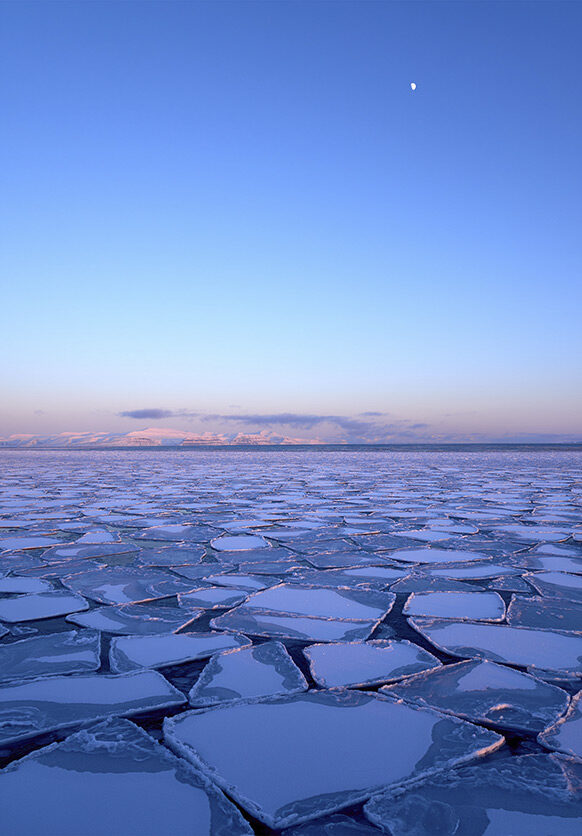
Stronger Together
Floris Smeets & Nicolai Brix
How do you explain an issue that’s so huge it affects the entire planet? In many ways, climate change is the biggest problem humanity has ever faced and with consequences that are literally global it needs to be fathomed before it’s fought. One tried and tested way is to break the problem down and look at it from a human level.
And so we find ourselves in Norway’s Dovrefjell National Park, the fabled mountain landscape that’s home to the musk ox. It’s a location that’s certainly personal to wildlife photographer Floris Smeets, who has been documenting the musk ox here for a decade. Together with videographer Nicolai Brix, they created a film that shows how musk ox are suffering in an environment that’s no longer their own.
 © Floris Smeets | Sony α1 + FE 400mm f/2.8 GM OSS | 1/320s @ f/6.3, ISO 1000
“I’ve been photographing musk ox in Dovrefjell for so long that I can very clearly see how changes in climate are affecting them,” Floris begins, “I’ve seen the whole thing playing out before my eyes. And that’s very much what Nicolai and I wanted to tap into with this film.”
“It’s a lot more impactful for us to show examples of species suffering, as well as the effect on the people who’ve grown close to them. If you look at natural history filmmaking, it’s often a lot more compelling when it creates an emotional response. We think of starving polar bears on melting ice-sheets, but something just as devastating is happening to the musk ox.”
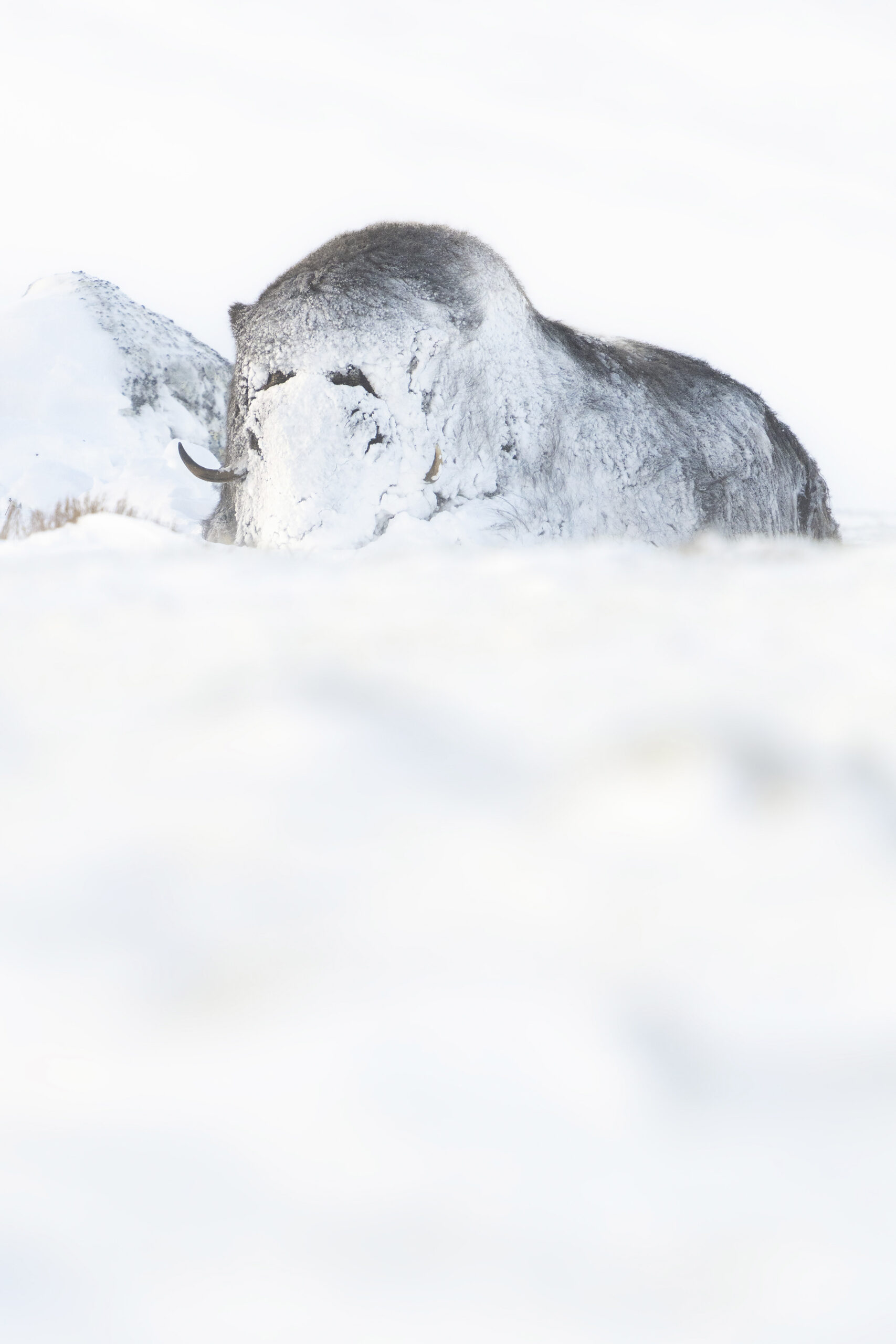 © Floris Smeets | Sony α1 + FE 200-600mm f/5.6-6.3 G OSS | 1/1250s @ f/6.3, ISO 1250
Utilising their trusty Sony kit, Floris and Nicolai headed into their project confident they were best equipped to capture the story. “The Sony Alpha 1 has become my go-to wildlife photography camera,” Floris says, “because I’m 100% sure the autofocus will nail every single shot, even when there’s a lot of snow in the air or in difficult light. I also use an Alpha 7R III as a second camera and swap between FE 400mm f/2.8 GM OSS and FE 600mm f/4 GM OSS lenses, depending on the distance to the animals and the surroundings.”
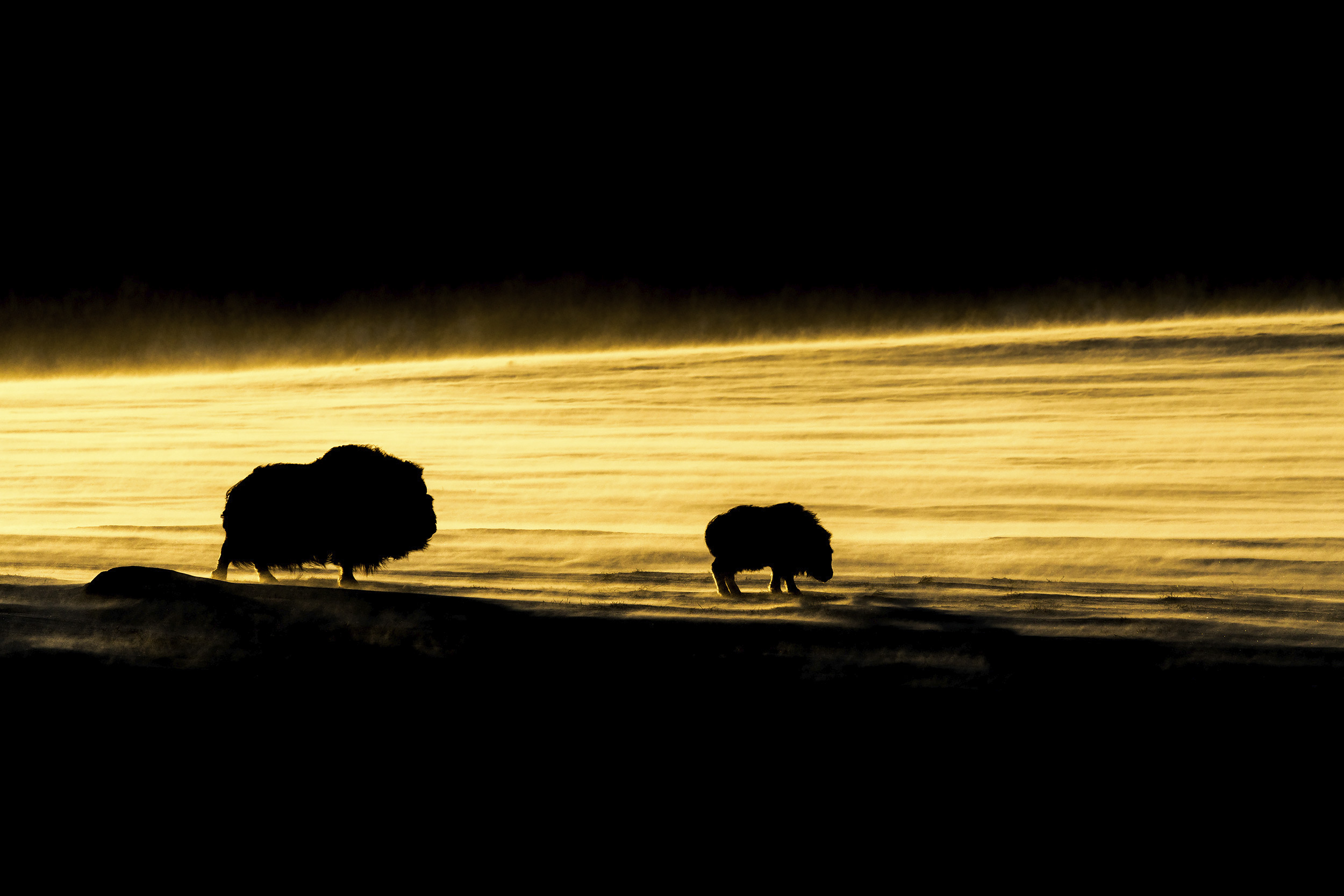 © Floris Smeets | Sony α7R III + FE 100-400mm f/4.5-5.6 GM OSS | 1/3200s @ f/9.0, ISO 160
With new patterns of weather pushing more warm air into the musk ox’s environment, the duo was committed to showcasing its detrimental impact on the species. “One day the temperature in the mountains is -20ºC or -30ºC, and the next it’s raining. This means that a layer of ice forms on the ground, causing problems in feeding and movement. In the winter, the Ox eat grass, digging through snow to find it, but the ice makes this harder or even impossible, and some steep slopes are now too slippery for them to reach.”
“Also”, he continues, “when the temperature is closer to 0ºC, the snow gets much wetter and stickier. The ox aren’t adapted for this, so it collects in their fur as they dig, forming large balls of ice. All this slows them down and means they use more energy moving around in just the season when they should be conserving it. They’ve evolved to live in temperatures like -40ºC, so they also get overheated. Climate change will destroy them.”
 © Floris Smeets | Sony α9 + FE 400mm f/2.8 GM OSS | 1/1000s @ f/2.8, ISO 800
Floris admired the extra connection that Nicolai’s filmmaking could bring to the subject. “I’ve shot many thousands of photos of the musk ox over the years, but it’s not always easy to show in a still image the effects of climate change on their lives. Nicolai’s video work has really hammered home some of the behavioural problems they’re facing. I like to get a mix of stills that show the environment as well as closer studies of the animals, but a video can show the real action of them trying to survive in conditions they’re not specialised for.”
Nicolai recalls that although much of his work was fly-on-the-wall style and supporting Floris in his interviews, the need to report the ever-changing environment meant he took advantage of situations where he was able to capture the constant struggle of the species.
“Whenever possible”, he remembers, “I wanted to show how hard the musk ox had to work for even a little food, picking at the smallest pieces of grass. There was so much to capture about the devastating effects of climate change - I wish I’d had more people with me!”
 © Floris Smeets | Sony α1 + FE 600mm f/4 GM OSS | 1/1600s @ f/4.0, ISO 640
With the broad range of shots he required, Nicolai used two zoom lenses, the FE 24-70mm f/2.8 GM II for his documentary elements and the FE 200-600mm f/5.6-6.3 G OSS to capture the musk ox themselves. Both were twinned with an Alpha 9 III, “The overall quality of footage was super impressive,” he beams. “The camera’s new global shutter is brilliant when you have lots of motion and the AF is a huge upgrade. Another thing is the stabilisation, which helped me make all the footage hand-held. That’s incredibly useful when you need to travel light. I also used a Sony ECM-M1 mic for all the audio we recorded in the mountains.”
 © Floris Smeets | Sony α7R III + FE 100-400mm f/4.5-5.6 GM OSS | 1/5000s @ f/13, ISO 400
Summing up the project, both see it as something they could not have done alone. “We’re both educated in nature,” Nicolai explains, “and while we had a lot of respect for each other’s work, we’re very different kinds of creative. But that’s been a huge strength. I could not tell this story alone, and to make the kind of impact we wanted, it needed the pair of us.”
“That’s been the most eye opening for me, too” Floris agrees. “Together, we made something that we couldn’t do separately. And over those four days, concentrating on the musk ox and showing their struggle, we hope the message hits home. At least – and especially when it comes to fighting climate change – we’d think it proves that working together can achieve more than you can do alone.”
Featured products


Floris Smeets | Norway
"The constant change in nature makes nature photography so attractive. You can visit the same location every day and still come back with a different image every single time"

Nicolai Brix | Denmark
"Story first!"