
A Journey to the Gods
Dennis Schmelz
Through music, dance, and fire, the ritual of Theyyam tells the stories of the gods and ancient ancestors. It is an experience that fascinates and enchants as the spectacular costumes and performances bend reality, transporting the viewer to a different world. For his latest short film, Dennis Schmelz captured the drama of Theyyam with his Sony Alpha 1 II, and it was an intense filmmaking experience.
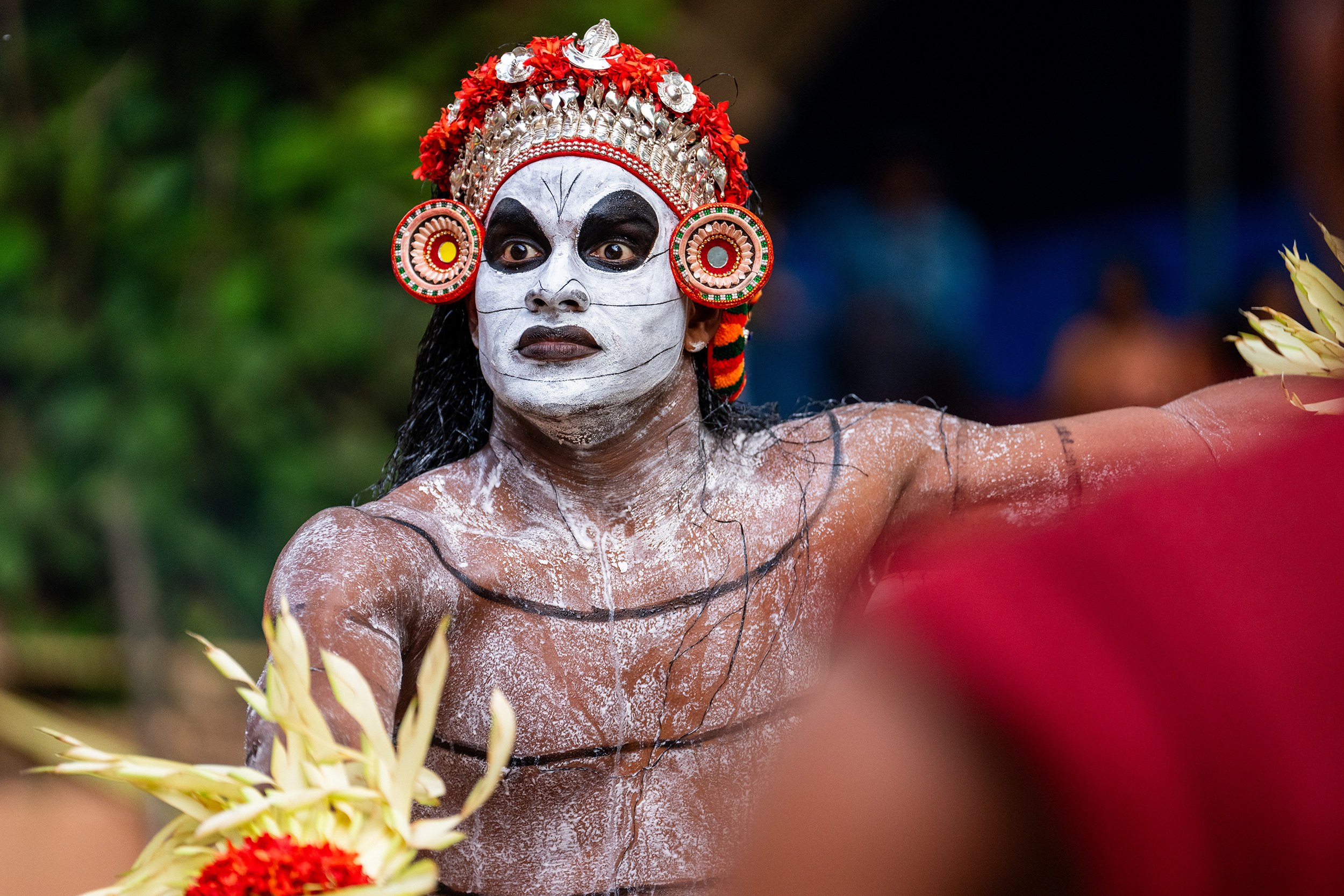
 © Dennis Schmelz | Sony α1 II + FE 70-200mm f/2.8 GM OSS II | 1/3200s @ f/2.8, ISO 640
“The Theyyam is the person that represents the god in the ritual”, says Dennis. “There are different Gods - good and bad, aggressive and lovely. The Theyyam are just normal people. However, when they enter the role, they are totally immersed. One Theyyam was kind of aggressive; he was hunting me and running towards the camera. My guide put his hand on my shoulder to let me know it was serious; this was not a game. I had to run away from him. But this is all part of the Theyyam’s journey. He starts super aggressive, and then over the two-hour ceremony, he gets more and more relaxed and calm.”
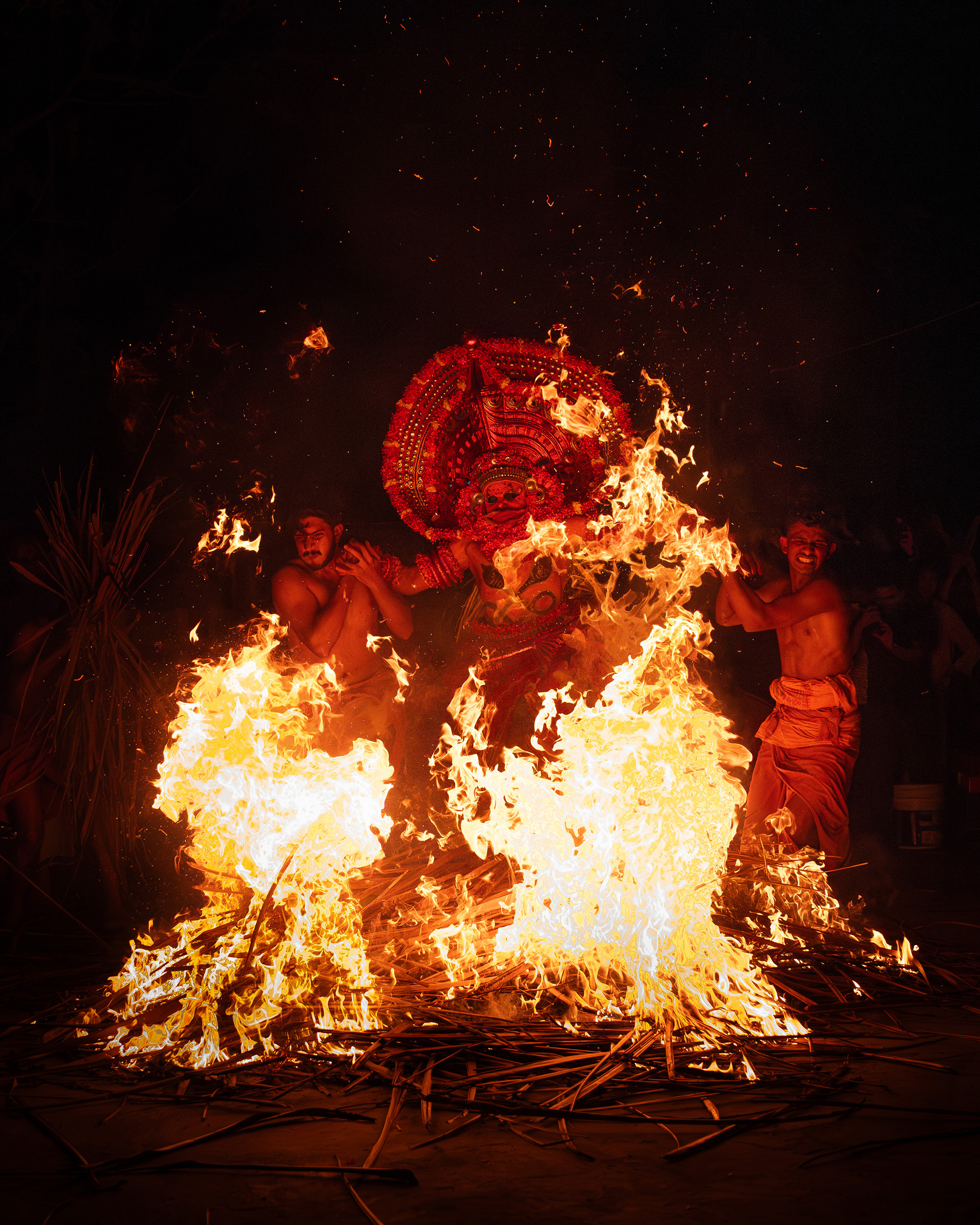
 © Dennis Schmelz | Sony α1 II + FE 70-200mm f/2.8 GM OSS II | 1/4000s @ f/2.8, ISO 1000
Dennis’ film, simply called ‘Theyyam’, shows the energy and power of this tradition, which isn’t widely known in Europe. “I read about Theyyam in a magazine last year. There was a big feature about a Theyyam festival in the south of India. I immediately put it on my list of things that I wanted to film, and then I happened to be filming something else in Sri Lanka and had some time off between shoots, so I booked a flight to Kerala and spent five nights travelling to different places.”
The Hindu ritual of Theyyam isn’t a large festival, even within India, it is localised around Kerala and Karnataka. There are many different versions, each telling their own story in small local rituals held in villages, forests and remote temples. Documenting it all required a lot of planning for Dennis, but luckily, he had a local guide who could navigate the short time he had to shoot everything.
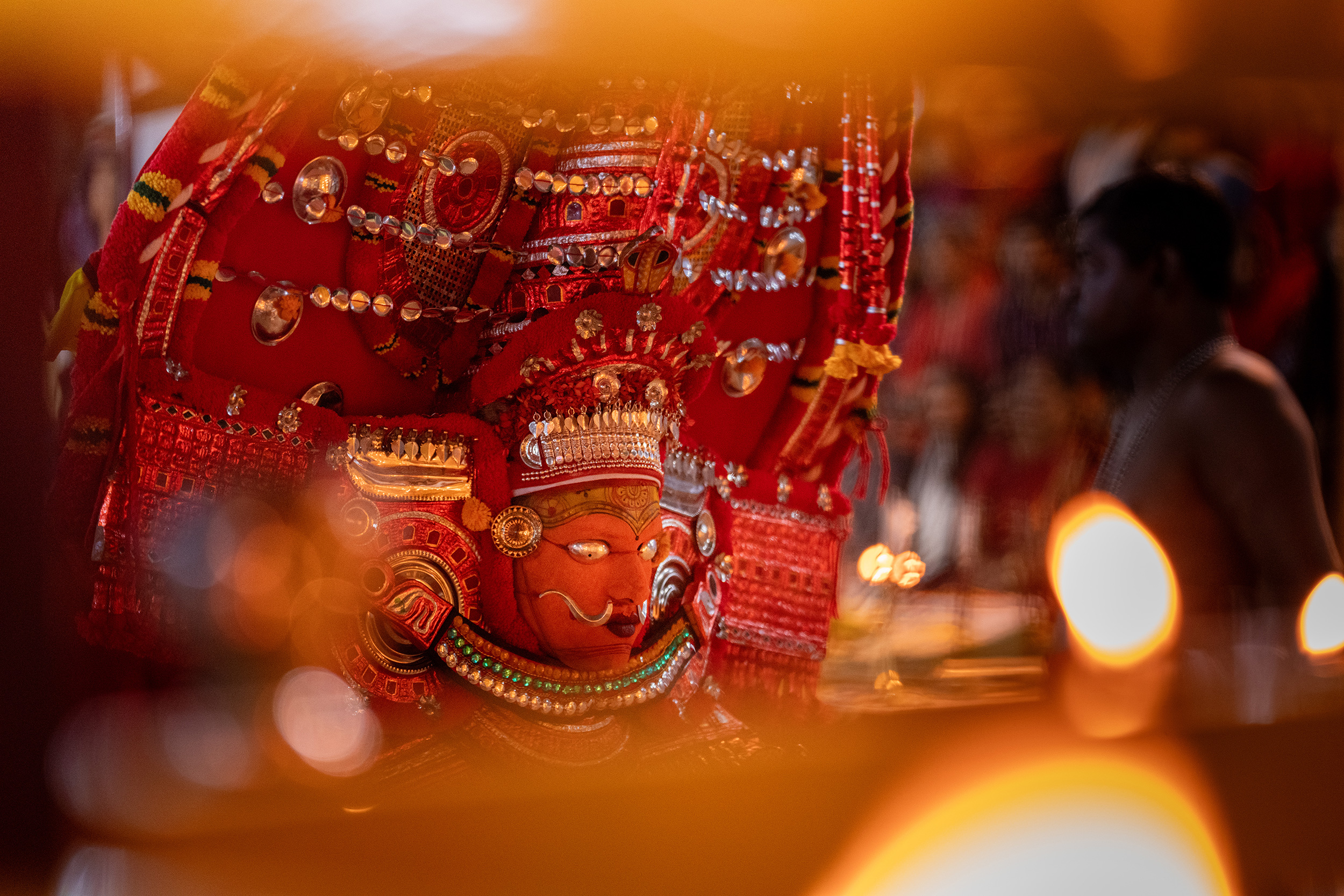
 © Dennis Schmelz | Sony α1 II + FE 24-70mm f/2.8 GM II | 1/3200s @ f/4.0, ISO 12800
We went to one Theyyam in the middle of the night and then to another one straight after and a third first thing in the morning”, recalls Dennis. “Then it was back for a few hours of sleep before heading to another at midday. There can be events happening at different villages and locations, so there was a lot of travelling and exploring.”
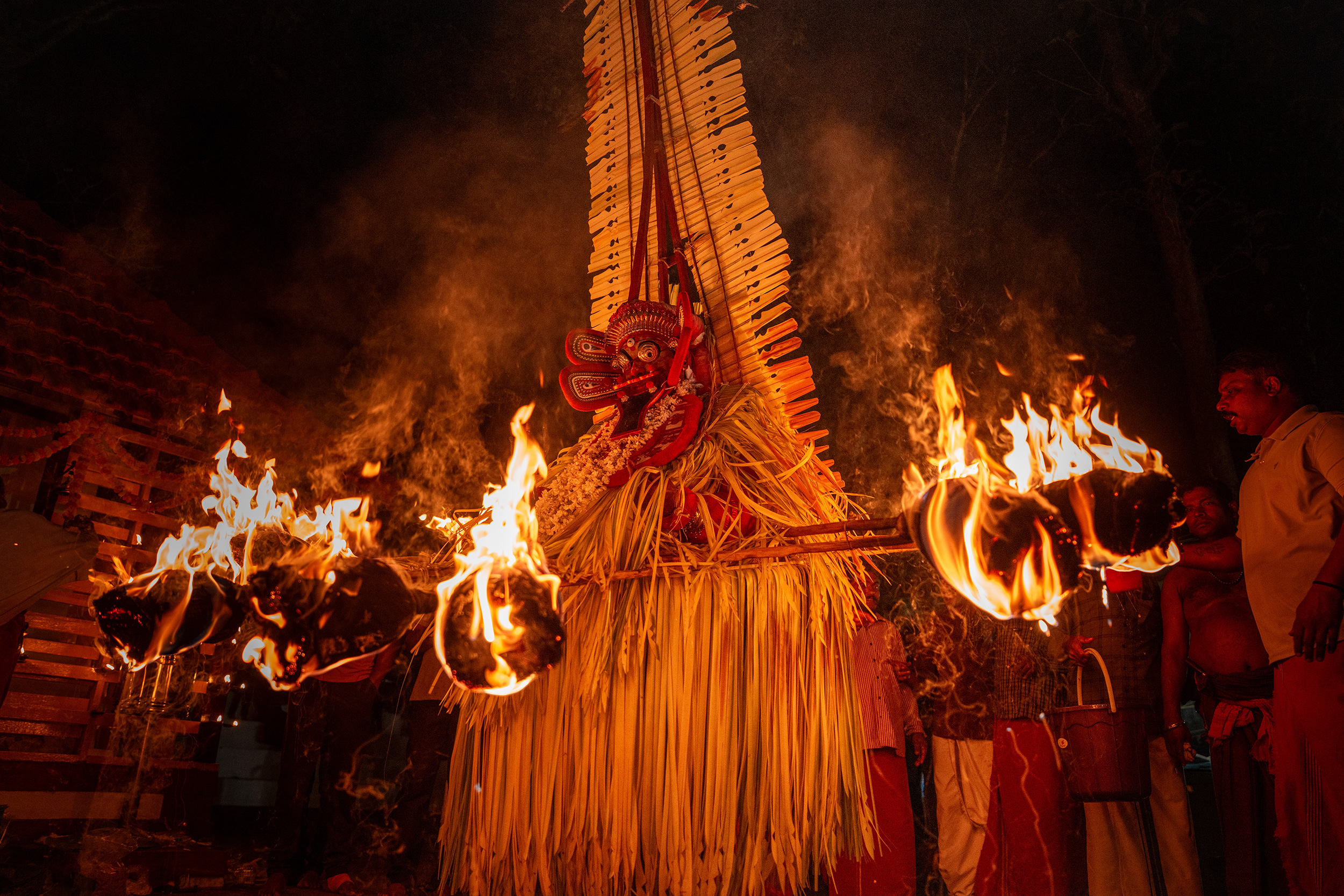
 © Dennis Schmelz | Sony α1 II + FE 70-200mm f/2.8 GM OSS II | 1/125s @ f/2.8, ISO 3200
Although the finished project was a video, Dennis also wanted to shoot photos, so he chose the Sony Alpha 1 II as his primary camera. “I also had the Sony FX3 on a gimbal when needed, but the Alpha 1 II was always on a shoulder mount or in my hands. It is the perfect hybrid camera for me, and it did a great job taking low-light video at night. I could film at ISO 12,800 in S-Log 3, which looks great. I shot mainly with the FE 24-70mm f/2.8 GM II and the FE 70-200mm f/2.8 GM OSS II lenses. I could combine the camera's Dynamic Steady Shot stabilisation with the Optical Steady Shot of the lenses, and it was like I was using a tripod. It was amazing.”
 © Dennis Schmelz | Sony α1 II + FE 24-70mm f/2.8 GM II | 1/160s @ f/2.8, ISO 2500
Also in his camera bag was the FE 16-35mm f/2.8 GM II lens, which he used for wider shots. Using the trinity of f/2.8 lenses allowed Dennis to shoot at f/2.8 to get as much light as possible to keep that ISO sensitivity as low as possible.
“I filmed almost everything in 4K at either 50 or 100fps, with the aperture at f/2.8 at ISO 12,800 and the shutter at either 1/100th or 1/200th sec depending on the frame rate. Shooting at these rates enabled me to get my favourite shots with this guy who was jumping through the fire, and there were all these embers flying through the air in slow motion. For this shot, I even switched from PAL to NTSC to increase the frame rate even more to get 120fps. I don’t mind switching between PAL and NTSC to get a few more frames and an extra slow-motion effect when I show the footage at 24fps. It looks so impressive.”
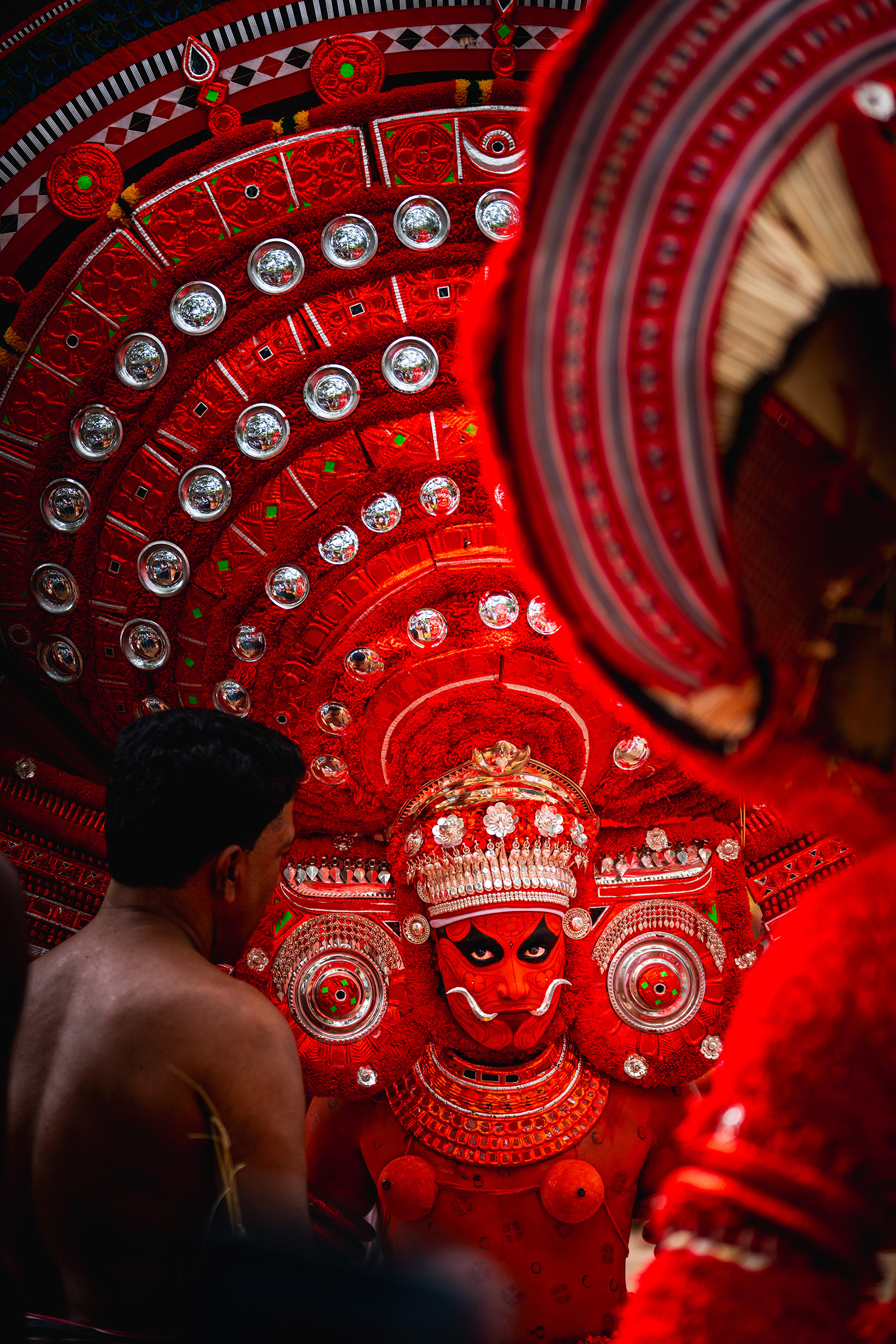 © Dennis Schmelz | Sony α1 II + FE 70-200mm f/2.8 GM OSS II | 1/320s @ f/2.8, ISO 200
The finished video is a dramatic, often tense spectacle of vibrant colour and contrast. Dennis’ goal was to introduce others to the culture and ritual. On his YouTube channel, you can also see the making of the video, which tells us even more about the festival and Dennis's adventure during his few days of shooting. “For us in Europe, the festival is so different from what we are used to. I wanted to capture it all and show others the rich culture and rituals of the people from this part of the world.”
Featured products


Dennis Schmelz | Germany
"There is always a story to tell and a fresh perspective to be discovered"


