
Made for Storytelling | Sony FX5
Ruben Scott
I’m Ruben Scott, a filmmaker and director working across narrative films and commercial productions.
For my latest project, "Different, but same," I wanted to explore the idea that even though we’re all different, there are always things that connect us: shared interests, hobbies, and small things in common that you would never normally assume. That idea was really the starting point for this project.
From the beginning, I knew this was going to be a fairly complex shoot. There were a lot of actors and a fairly large crew. From my experience, that kind of setup means you’re constantly balancing performance, time, and space all at once.
The story is set in a waiting room during a study where people are being matched based on shared interests, but they only find out who they are paired with on the day. That setup gave us a nice space to work with uncertainty and anticipation. It meant we could keep things simple in terms of storytelling and allow the audience to connect the dots.
We kept camera movement quite minimal throughout. Most of it is observational. There are gentle dolly moves and small reframes when we needed them, but nothing that feels like it’s calling attention to itself. The idea was always to focus on the performances and let them lead everything. Because there’s no dialogue in the film, the performances were particularly important.
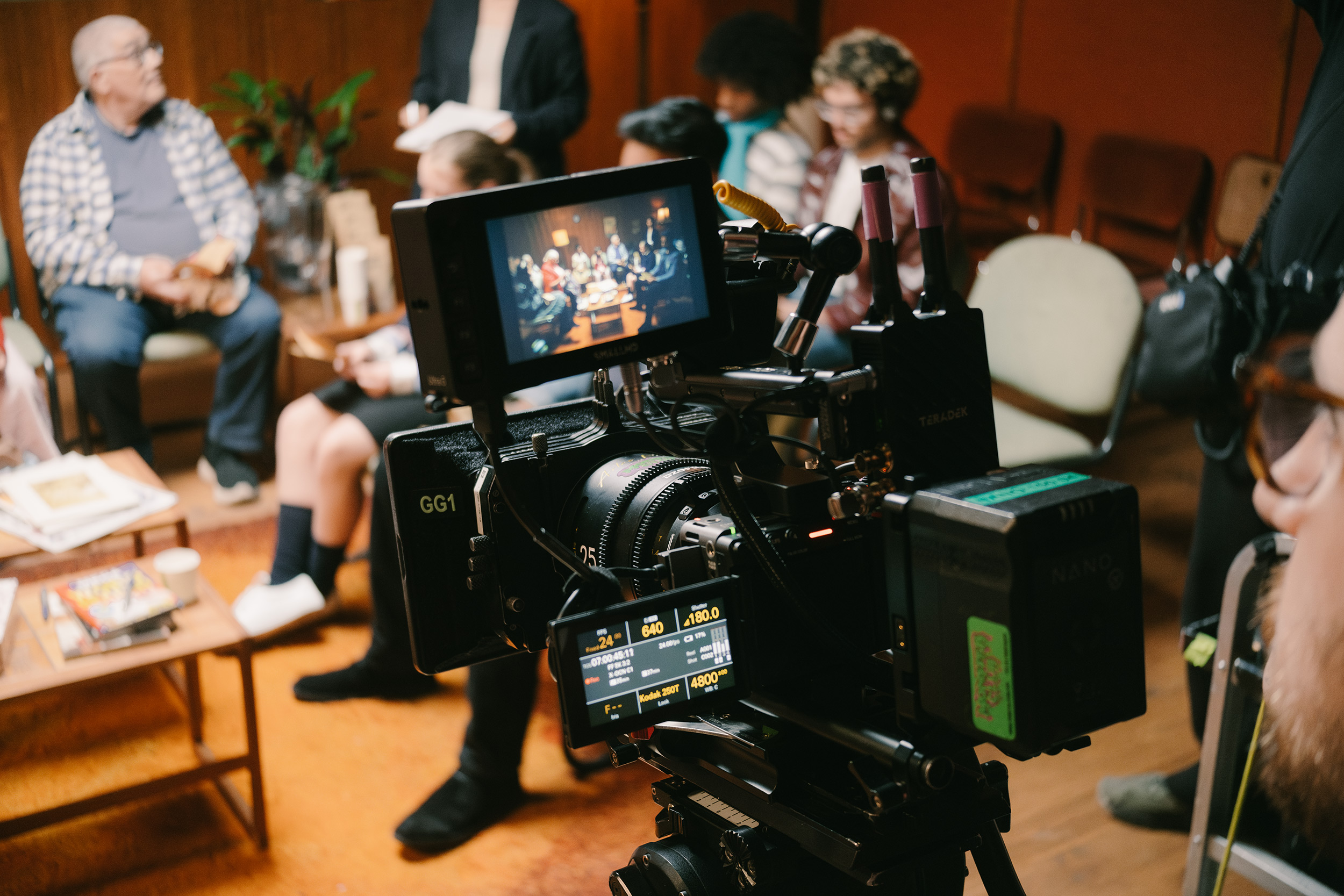
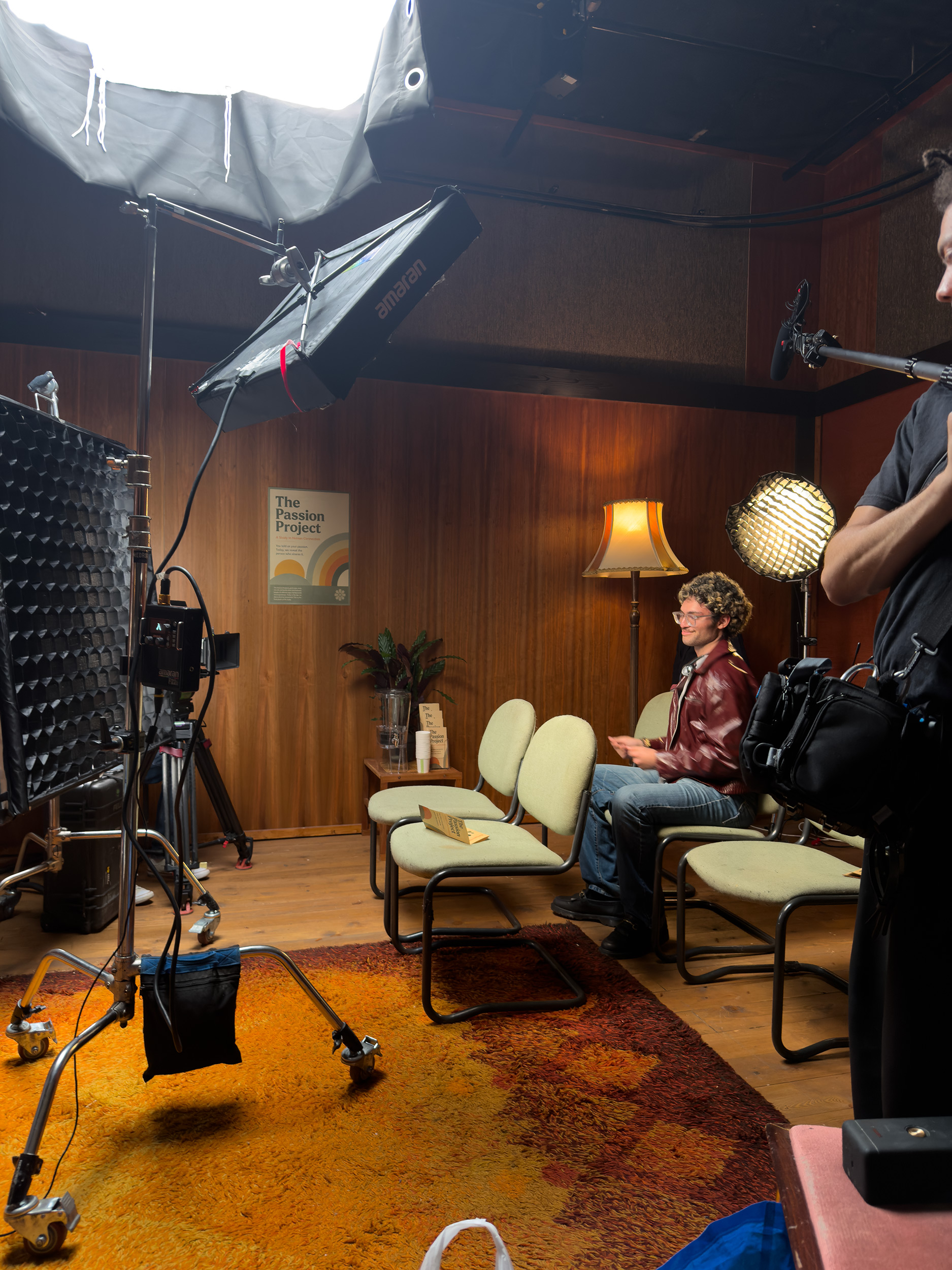
The location also played a huge part in shaping how everything looked and felt. We shot in a recording studio that already had a lot of character. It had warm wood panelling, orange tones, and a slightly nostalgic feel to it. It wasn’t just four white walls, and that actually helped us a lot. Instead of trying to build the waiting room from scratch, we could lean into what was already there.
 © Ruben Scott
That naturally fed into how we approached lighting. We used a large, soft overhead source to give us consistency and allow us to move the FX5 around quickly. Then we introduced practical lamps within the room to add warmth and depth. The goal was to keep everything feeling soft and natural while still giving enough contrast to shape faces and guide the eye towards the main character in the centre.
Because we were working with a mix of practical lights in the frame and darker corners in the space, the 15-plus stops of dynamic range became really important for us. There were plenty of times when warm lamps were visible in the shot while we still needed to hold detail in the surrounding areas. The FX5’s base ISO options were a massive help here too. With this camera, we didn’t feel like we were constantly having to protect highlights or sacrifice shadow detail to noise.
The combination of the new stacked 16.6MP sensor and the Arles Prime lenses did a fantastic job of capturing the close-up details of the cast too. The skin textures and the textures in the costumes felt incredibly natural.
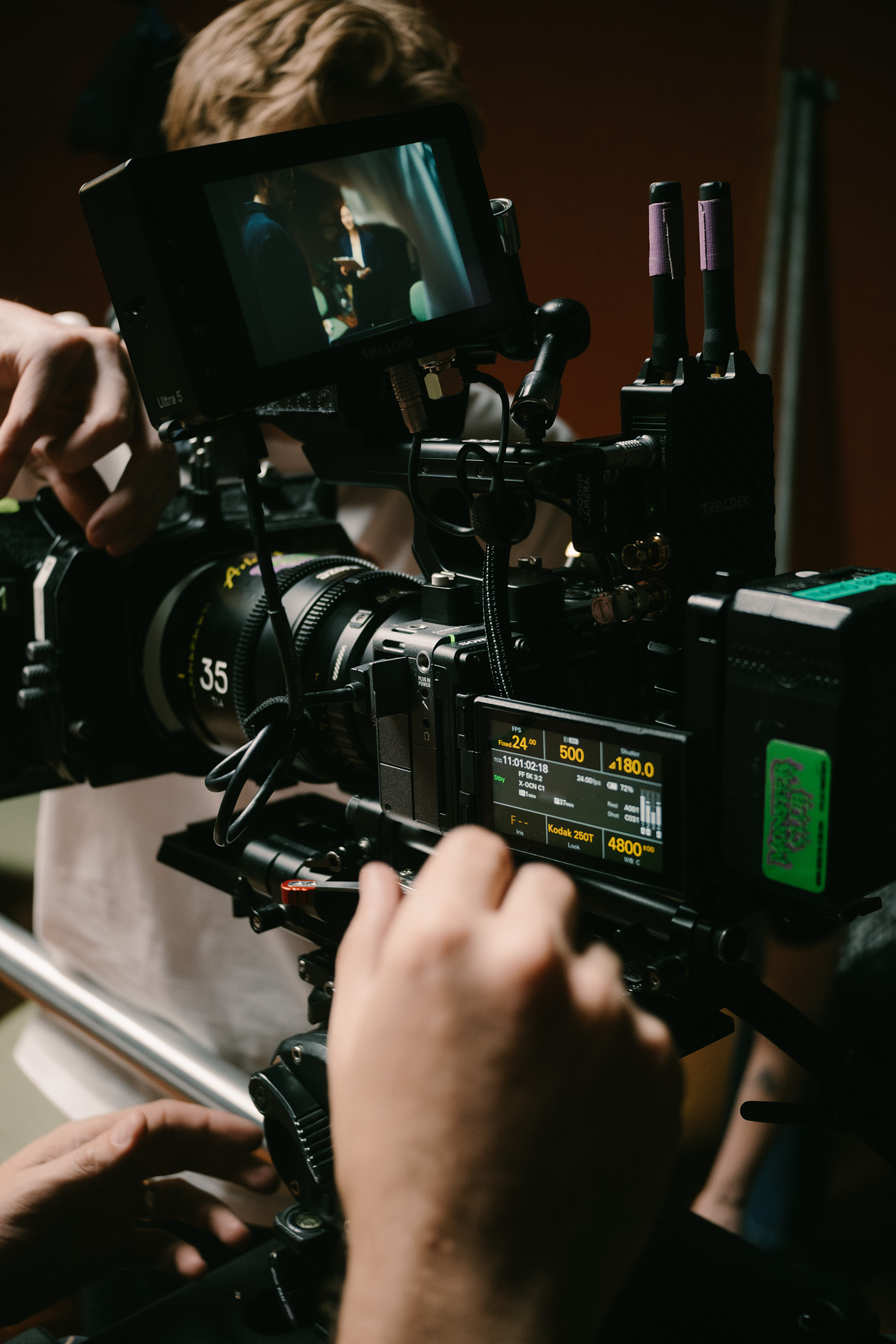
Colour was something we were quite intentional about from the start. We wanted a palette that felt vibrant and slightly inspired by the 1970s, but still modern. This was going to be a good test for the camera. A lot of that came from wardrobe and production design choices, but the way the camera captured those colours was exactly what we were looking for.
 © Ruben Scott
Skin tones were especially important because we had a very diverse cast, all under the same lighting conditions. We needed everything to sit together in a cohesive way. What I noticed was how stable and natural the skin tones felt across different setups. That is something I have also experienced when working with the Sony Venice and Burano. There’s a familiar quality in the colours and highlight roll-off across those systems, and this camera feels like it has those qualities, just in a smaller and more flexible body.
We chose to shoot internally in 16-bit X-OCN because we knew we’d want total flexibility once we got into post-production. There were moments where we pushed colours slightly or adjusted exposure in some parts of the frame, and the footage held together really well. Nothing felt like it broke apart or became unstable. Even when working across different lighting conditions, the skin tones remained consistent. This helped us during grading.
 © Ruben Scott
From a workflow point of view, we were working with a medium-sized crew over a single day, so working fast was key. What stood out was how easily the camera fitted into the rhythm of our shooting schedule. It didn’t slow anything down, and it didn’t require us to rethink how we worked.
Having worked with the Venice and Burano before, I was also interested in how this fits into the wider CineAlta world. This camera doesn’t feel separate or like a different branch; it feels like part of the same family, just adapted for a more agile kind of production. Even the menu structure and general operation feel familiar, which really helps when you’re moving between different Sony cameras across projects.
For me, the FX5 worked because it gave us so much freedom: freedom to capture what we wanted without compromise, freedom to play around with the image in post, and freedom to keep the focus on the story rather than the equipment or any technical difficulties. That’s really what I look for in a camera.


