
The Power of the Underdog
Chris Schmid
Amidst the arid harshness of the desert frontier, a rugged group of travellers journey through hostile territory while iconic characters clash in a ruthless battle for survival. If it sounds like the plot of a classic western movie, then Chris Schmid might have just nailed his latest documentary project, ‘Bone Dry.’
But while western movies and TV series often depict morality battling chaos, here the only law is that of survival. “It’s a film about the circle of life,” Chris explains, “where we follow the annual migration of the wildebeest from the south of the Serengeti to the north, and back again. They follow the rains and the fresh grasses, but their journey is perilous, crossing swollen rivers and avoiding predators like crocodiles, lions, cheetahs and hyenas. But we have styled it like a classic western.”
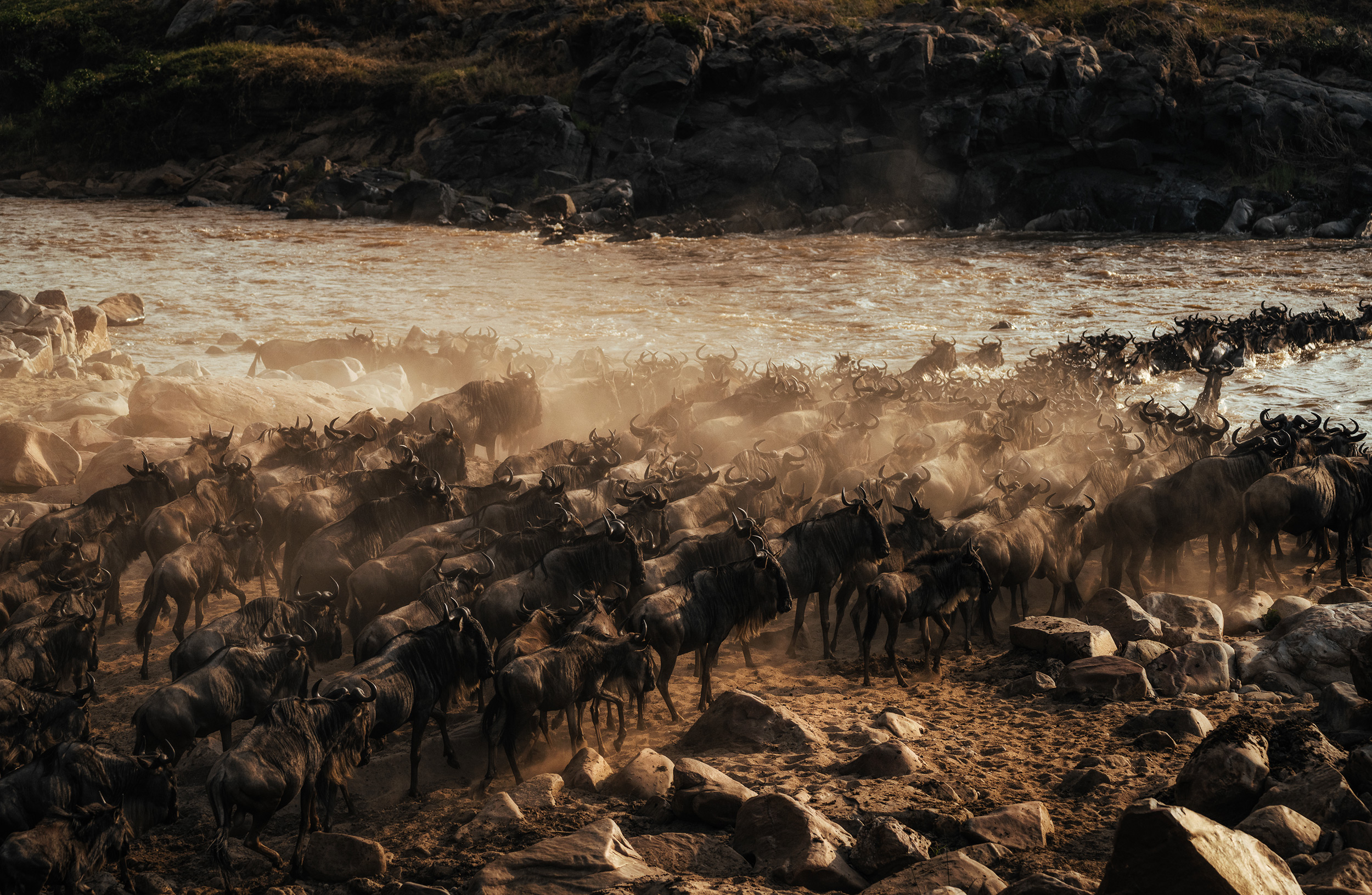 © Chris Schmid | Sony α7R IV + FE 100-400mm f/4.5-5.6 GM OSS | 1/1000s @ f/6.3, ISO 640
So, what made Chris use such a creative approach? “There are plenty of natural history documentaries on the subject and so many videos online competing for attention, so we really wanted to do something fresh and compelling,” he says. “The narration is factual, because there are important things to understand, and the audience doesn’t want fantasy, but we can take certain tropes and tools from cinema to make it more engaging. And this I hope will get people to stop and pay attention.”
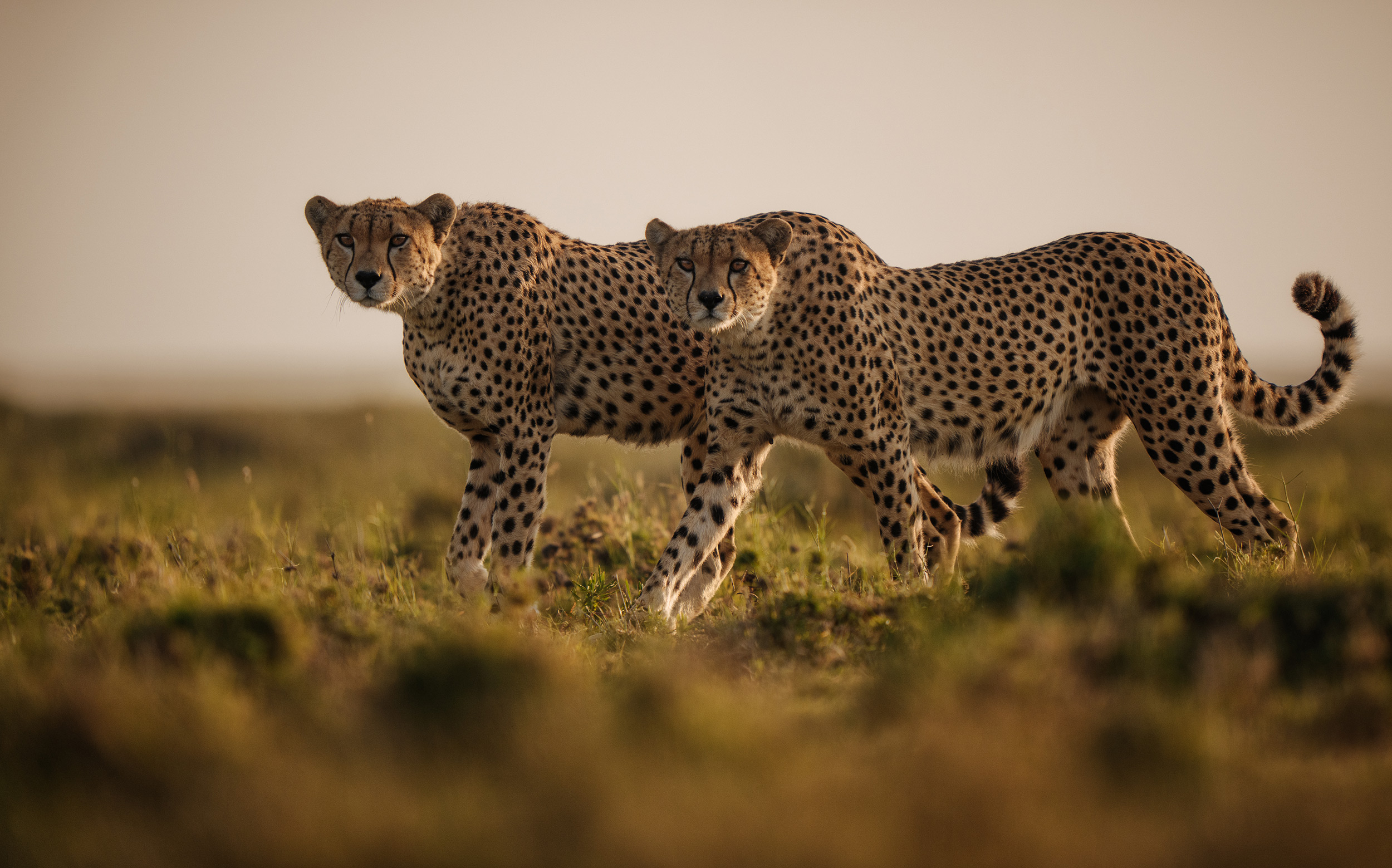 © Chris Schmid | Sony α1 II + FE 400mm f/2.8 GM OSS + 1.4x Teleconverter | 1/1600s @ f/4.0, ISO 250
One of those tools is to show character, which is something Chris says can only be achieved through dedication and long-form filmmaking. “For this project, we’re shooting on and off for about half a year,” he explains, “starting in April and following the migration north through June, July and August, then back to the south on as we reach November. That amount of time lets us find a narrative and concentrate on specific animals and family groups, both in the wildebeest herd, and the predators who rely on them.”
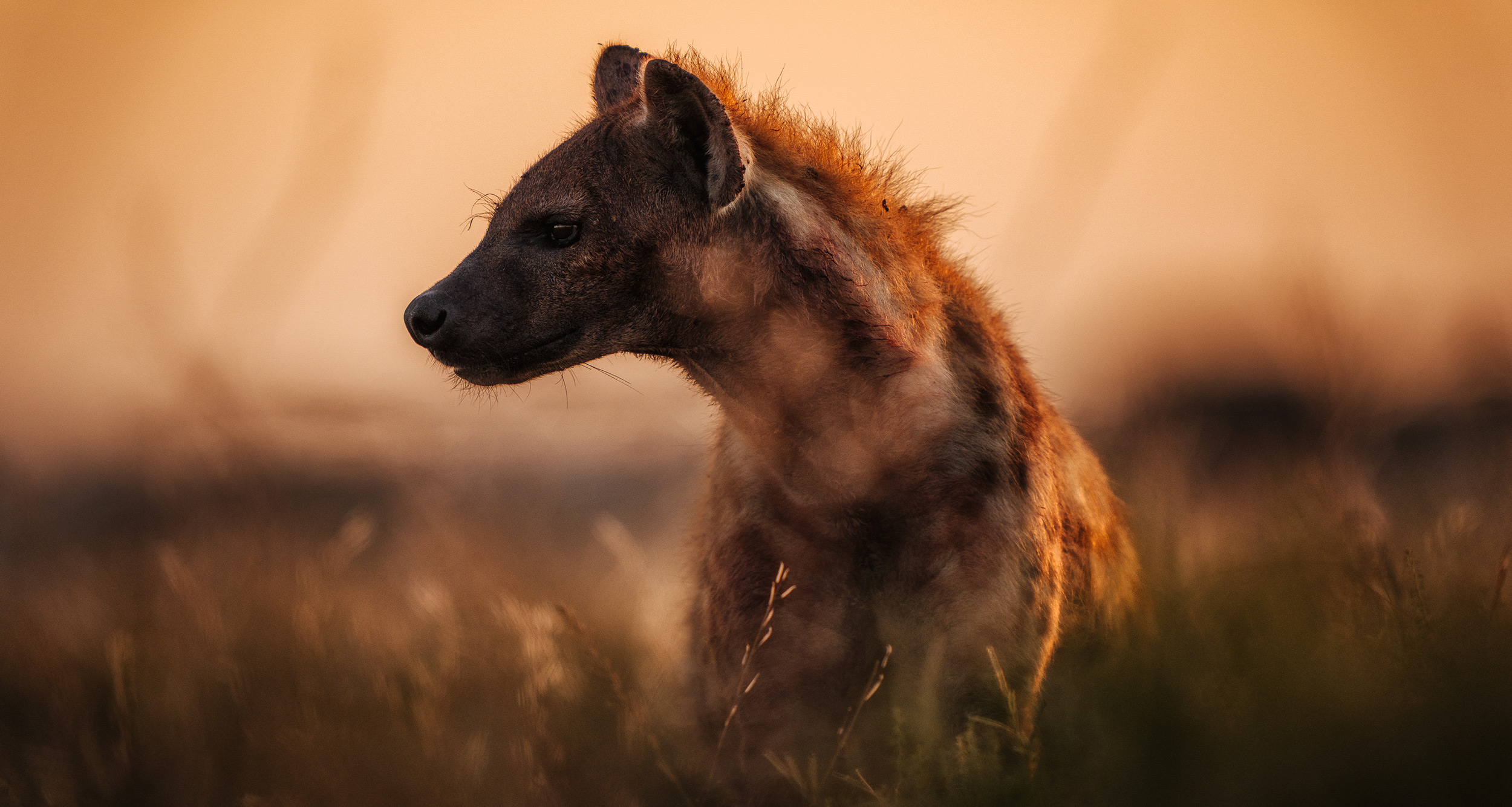 © Chris Schmid | Sony α1 II + FE 400mm f/2.8 GM OSS + 1.4x Teleconverter | 1/1250s @ f/4.0, ISO 800
“Here,” he continues, “it’s also the ‘supporting cast’ which we’re paying most attention to, principally the hyenas, who’re often in the shadow of the lions and cheetahs. And this is one of the main purposes of the film, to give those species a voice. Hyenas are often portrayed as the ‘bad guys,’ and in fiction, they’re unfairly shown as nasty, scheming and cowardly, but in the context of this movie, we’ll be able to show how that’s a caricature, not a true character.”
“Hyenas,” he continues, “not only have relatable roles within their packs, with strong family bonds, they’re as smart as chimps. And they play a vital part in the eco system. Thanks to them and other scavengers, there’s almost no disease in the Serengeti. And sure, they’re still hyenas. But if they kill an animal it’s because they need to feed their cubs or to avoid competition from other carnivorous species.”
It’s the same with the wildebeest, he says. “People often think of the herd as a single entity. But when you take the time to study them, they’re all individuals. There are many small family groups, with uncles and aunts staying together for protection, which you can see when they cross the river. They support each other.”
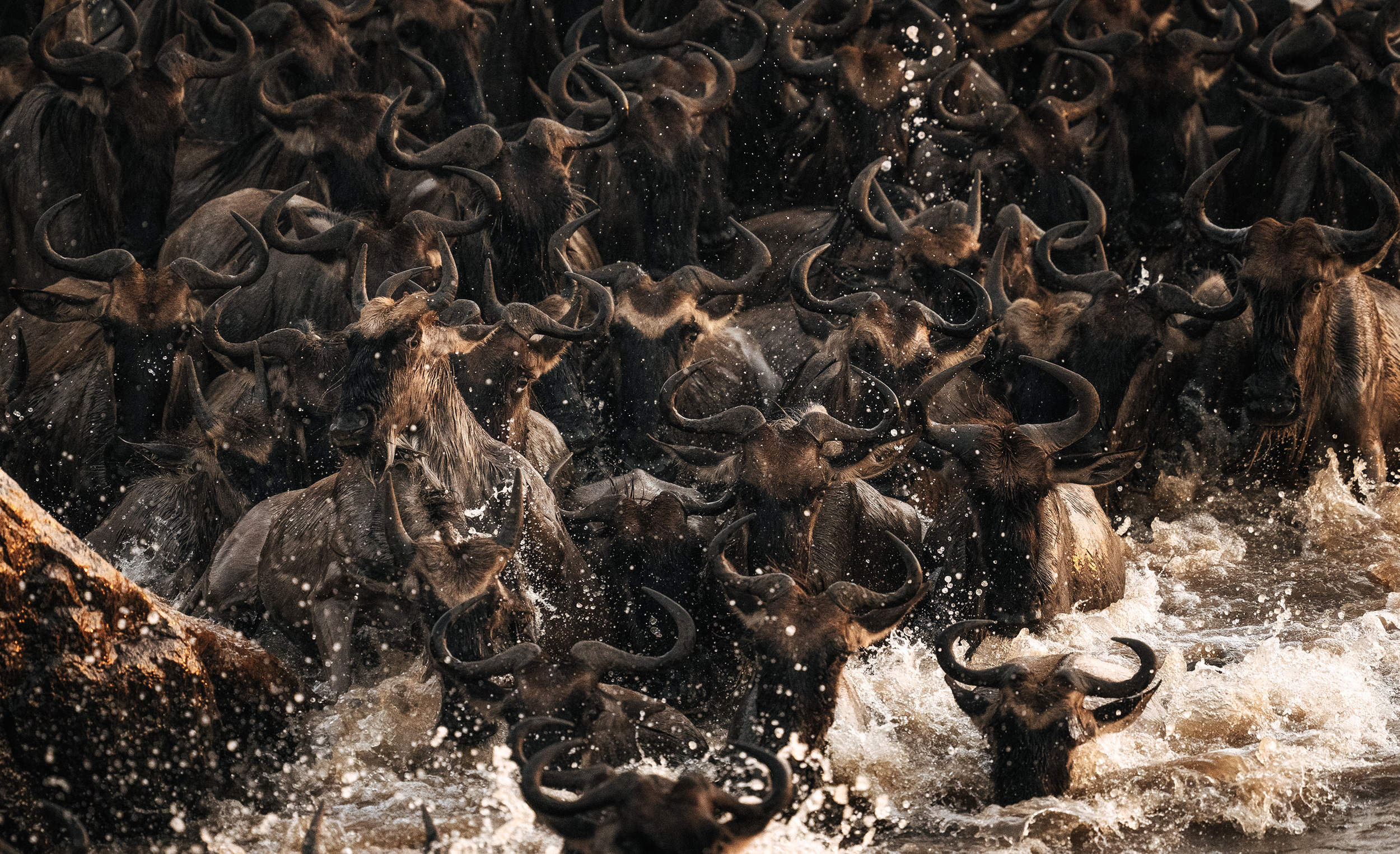 © Chris Schmid | Sony α1 + FE 300mm f/2.8 GM OSS + 1.4x Teleconverter | 1/1600s @ f/4.0, ISO 2000
“If we can raise awareness and create empathy, we can motivate people to protect these species and thereby the whole ecosystem,” Chris continues. “And there is plenty of threat. In normal times, because the hyenas don’t migrate, they have to survive while waiting for the wildebeest to return, which is a trial in itself, but now they also have pressures from farming, which means these species have to survive in smaller and smaller spaces. So there’s a lot more competition for food and more confrontation between them.”
“Climate change also means temperatures are rising and there’s less rain,” he says. “So, there’s more desert, less food, less grazing, and the population falls. So more pressure again. We’re seeing this all over the world. When you break one part of a system, you break the others, too.”
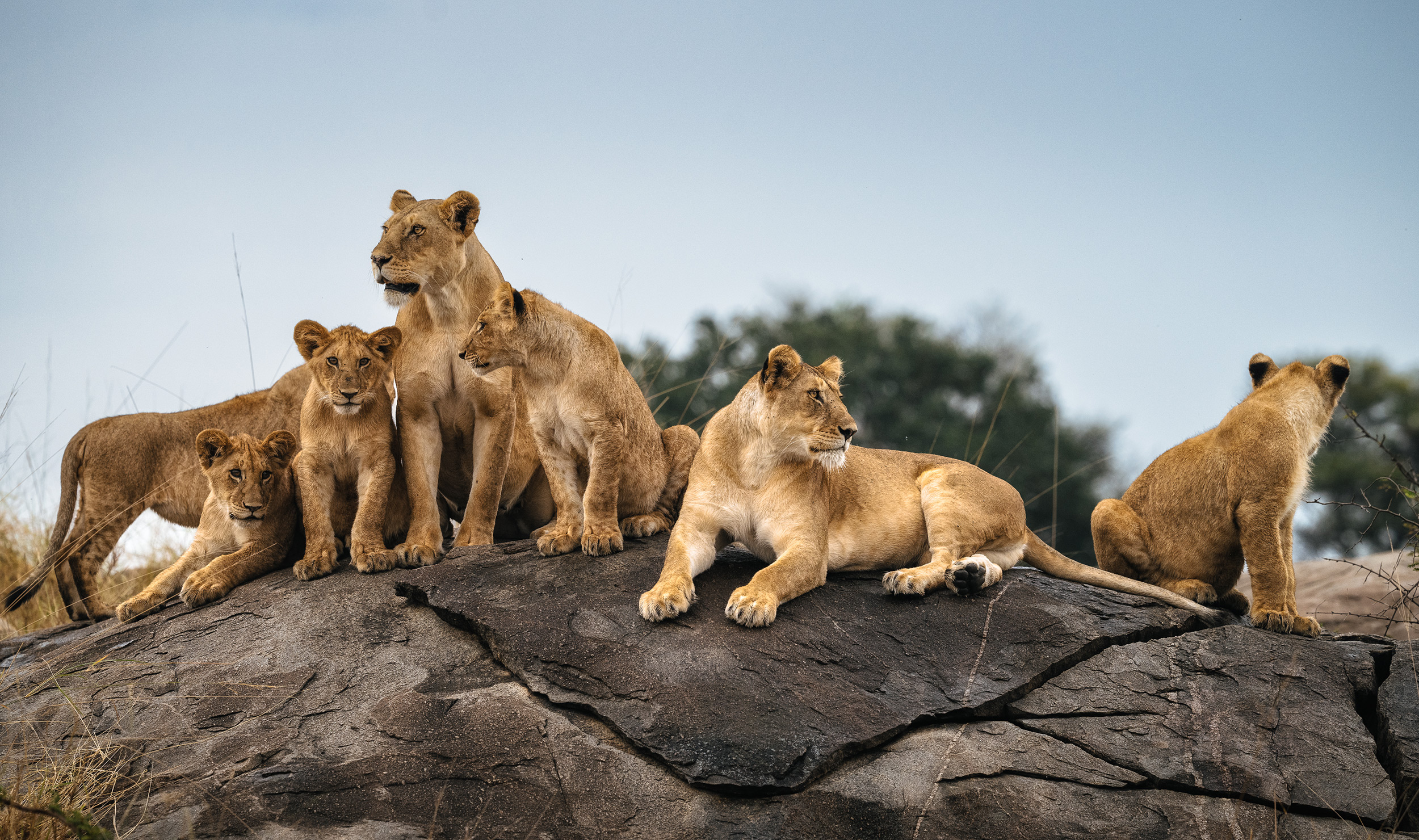 © Chris Schmid | Sony α1 + FE 300mm f/2.8 GM OSS + 1.4x Teleconverter | 1/800s @ f/5.6, ISO 800
To achieve his aim of a natural history documentary styled like a western, Chris has taken numerous steps in shooting and post production, making choices about his kit, framing, grading, music, even the font and the character names used in the narration. “I’ve spent a long time watching westerns,” he says, “particularly more modern examples like ‘The Power of the ‘Dog’ and ‘Train Dreams,’ and so we begin by composing in certain ways to create that atmosphere before giving it western colour and sound in post.”
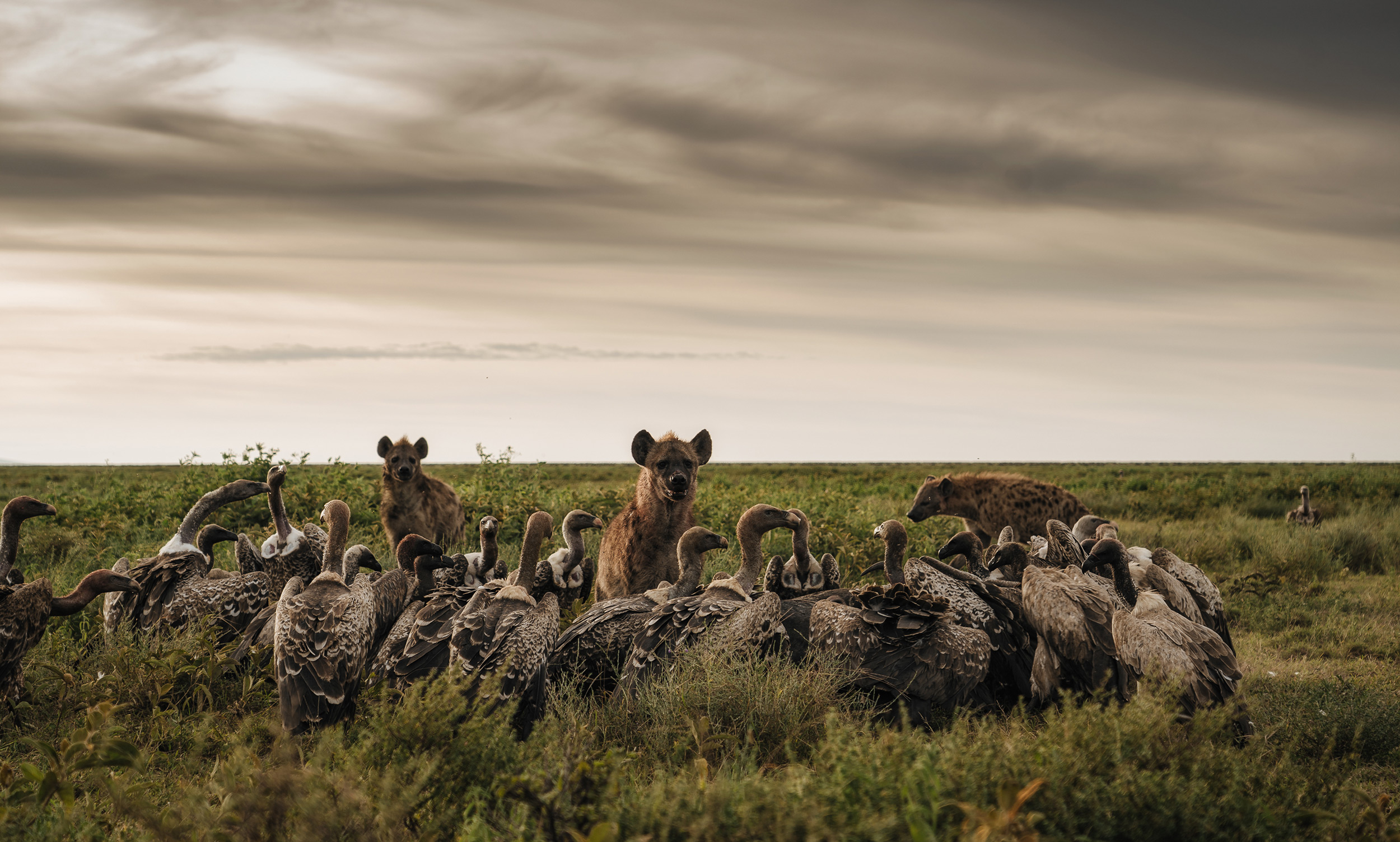 © Chris Schmid | Sony α9 + FE 24-105mm f/4 G OSS | 1/250s @ f/5.0, ISO 100
“For instance,” he continues, “for the wide shots that show the Serengeti landscape, we use the same sort of anamorphic lenses that cinematographers do. Showing the place is very important and we need to see its deserts, mountains and dusty mesas, which have the same epic scale as the American West. Shooting in the golden and blue hours, it’s very beautiful, and the Serengeti becomes a character itself, a representation of untamed nature.”
“Those lenses don’t have much magnification though, so for the more behavioral shots, we switch to regular telephoto lenses. And it’s here that the Sony Burano really comes into its own. Thanks to its 8K sensor, it’s an exceptional camera for working in different formats, so while we often use the Super 35 format lenses giving a 5.7K file, that still allows lots of resolution to crop in or stabilize footage.”
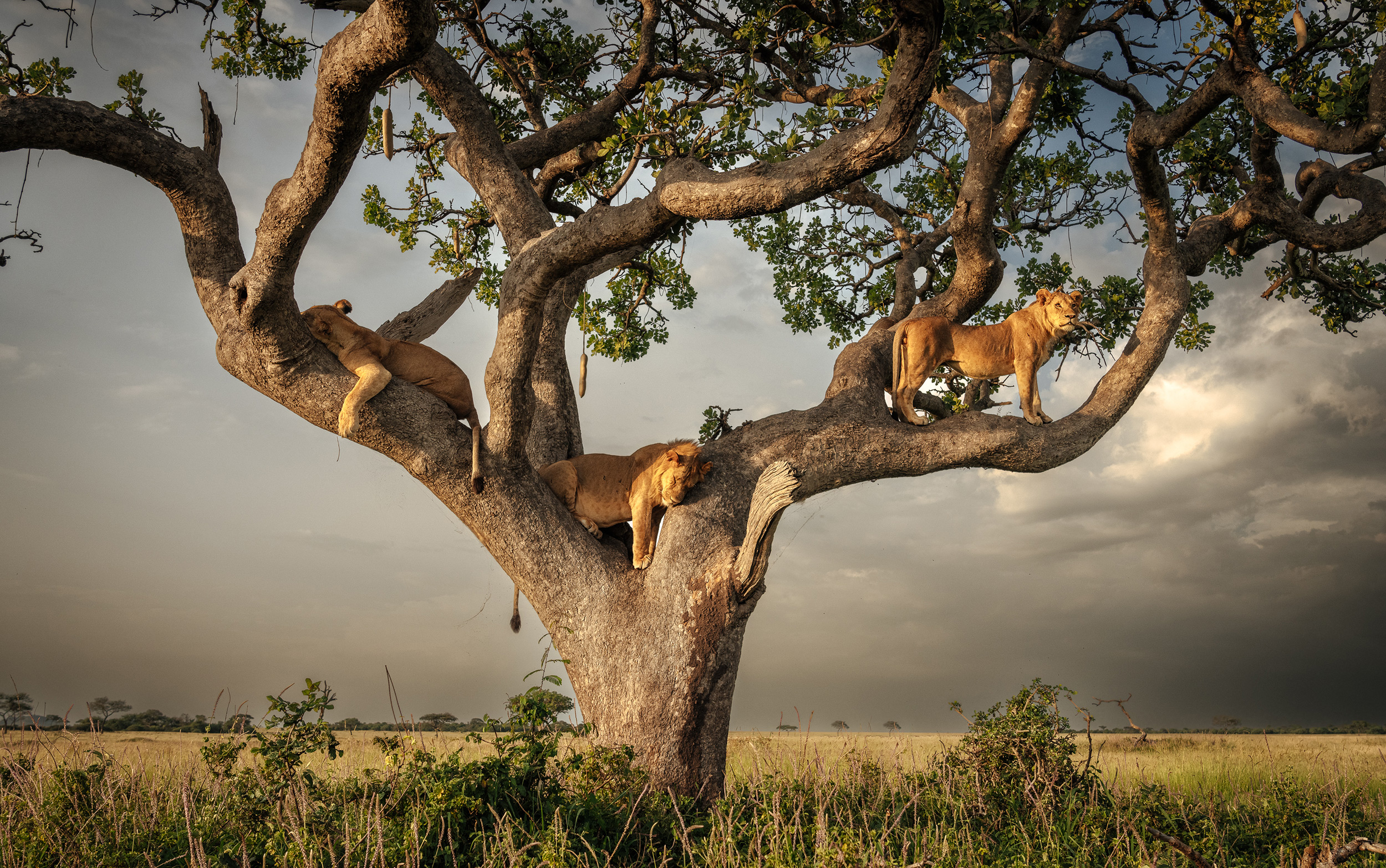 © Chris Schmid | Sony α1 + FE 24-105mm f/4 G OSS | 1/640s @ f/6.3, ISO 320
The speed and adaptability of the Sony Burano is also a standout feature for Chris. “I have the camera’s function buttons set up so that I can react in an instant,” he confirms. “One is set to cycle through crop modes, and another is a shortcut to the 120fps slow-motion mode. The third controls the prerecording function. I have it caching 10 seconds of footage all the time, which is incredible for wildlife. You hit Rec when something happens and you have 10 seconds already in the bank.”
“Because of the grading required, we shoot in SLog3 and use the camera's 16-bit Raw format, which is so much smaller in file size than ProRes format that we need far fewer hard-drives on location,” he reveals, “while the camera also boots up so fast you can use it almost immediately when the action happens. The Dual ISO feature also means we can shoot with much higher quality after sunset, and the internal ND lets you adjust in a fraction of a second if a subject moves from shadow to sunlight.”
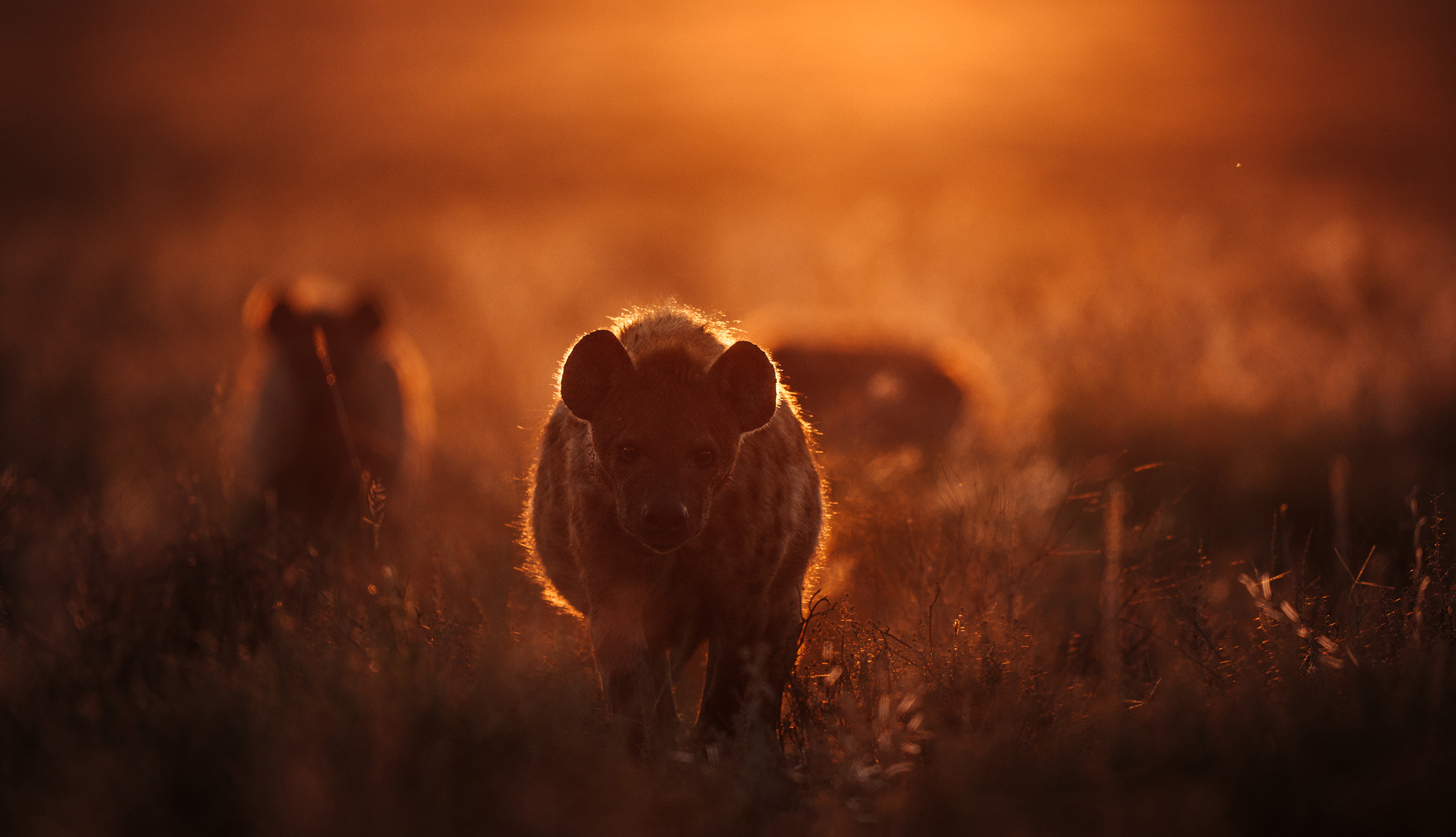 © Chris Schmid | Sony α1 II + FE 400mm f/2.8 GM OSS + 1.4x Teleconverter | 1/1250s @ f/4.0, ISO 500
“But aside from superb visuals, one of the most important things that Sony is helping me with is the actual production and distribution of Bone Dry,” Chris finishes. “When the film is created it needs to be seen or all the aims will be for nothing. I want to change people’s minds about these underdogs and show that they’re just as important as the ‘hero’ species.”
“It’s a big task to raise awareness, but people need to understand that to protect a place, they have to protect every species within it, not just the icons and apex predators. The same goes for any ecosystem, whether it’s in Africa, in Europe, on land or under the sea. When you follow the characters and see how smart they are, how they look after each other, you understand them and you want to protect them. Hopefully Bone Dry will do exactly that.”
Featured products


Chris Schmid | Switzerland
"Imagery is powerful. A single shot can capture an emotion or trigger a feeling within"


