
Lighting the Way Forward
Duncan Bonnifay
My name is Duncan Bonnifay, and I’m a French director and cinematographer mainly working on commercial films and behind-the-scenes content for filmmakers. Sony cameras have been part of my journey since the very beginning, so when I was contacted to create a launch film for the new Sony FX5, it genuinely felt like a dream project.
At first, I thought I would have around three months to prepare everything. In reality, I had less than a month to write, plan, shoot and edit the beauty film, while also creating BTS content, feature material and stills. It was intense, but that pressure also pushed the project into a very exciting creative place.
Sony gave me a lot of freedom. I didn’t want to make a classic product film or simply show the camera as an object. I wanted to create something cinematic, emotional and complete, almost like a commercial film, but without depending on an existing brand or product. The starting point was the tagline, “Lighting the Way Forward.” As a cinematographer, light is everything. It shapes images, reveals emotion and gives meaning to a frame. But at that point in my life, light also had a more personal meaning.
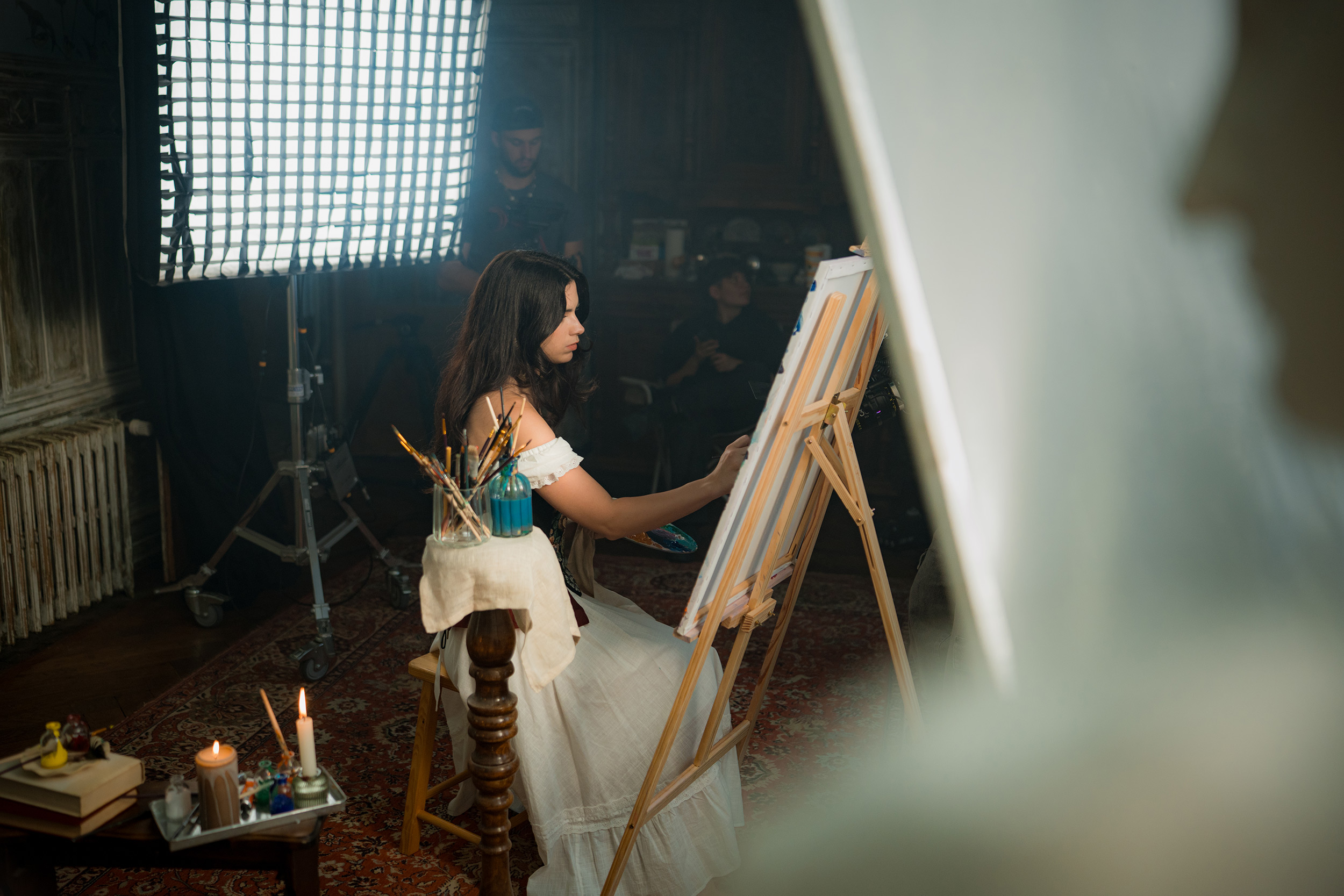
A few months before the project, I lost my grandmother. That experience changed the way I understood light. It became something quieter, something invisible but still present, something that can guide you when you feel lost. So, the film became the story of a painter who has lost her creativity, travelling through different worlds and elements until she finds her way back to creation.
 © Duncan Bonnifay
Why did you choose such a poetic approach instead of something more realistic?
I wanted the film to work on two levels. On the surface, it is about an artist trying to reconnect with her creativity. Underneath, it is also a subtle tribute to memory, absence and the way art can help us move through grief without explaining everything too directly.
A realistic story would have made the message too obvious. I wanted something more universal, where viewers could bring their own feelings and interpretations. The painter, the blank canvas, the light, the forest, the dunes and the ocean all became metaphors. They allowed me to speak about creativity and loss without saying too much.
How did knowing you had a new sensor and internal RAW affect the script?
I didn’t write the film around technical specifications, but knowing what the FX5 could do gave me a lot of confidence. I knew I could shoot handheld, work in Open Gate, use anamorphic lenses, shoot slow motion and record internal X-OCN RAW without building a heavy rig.
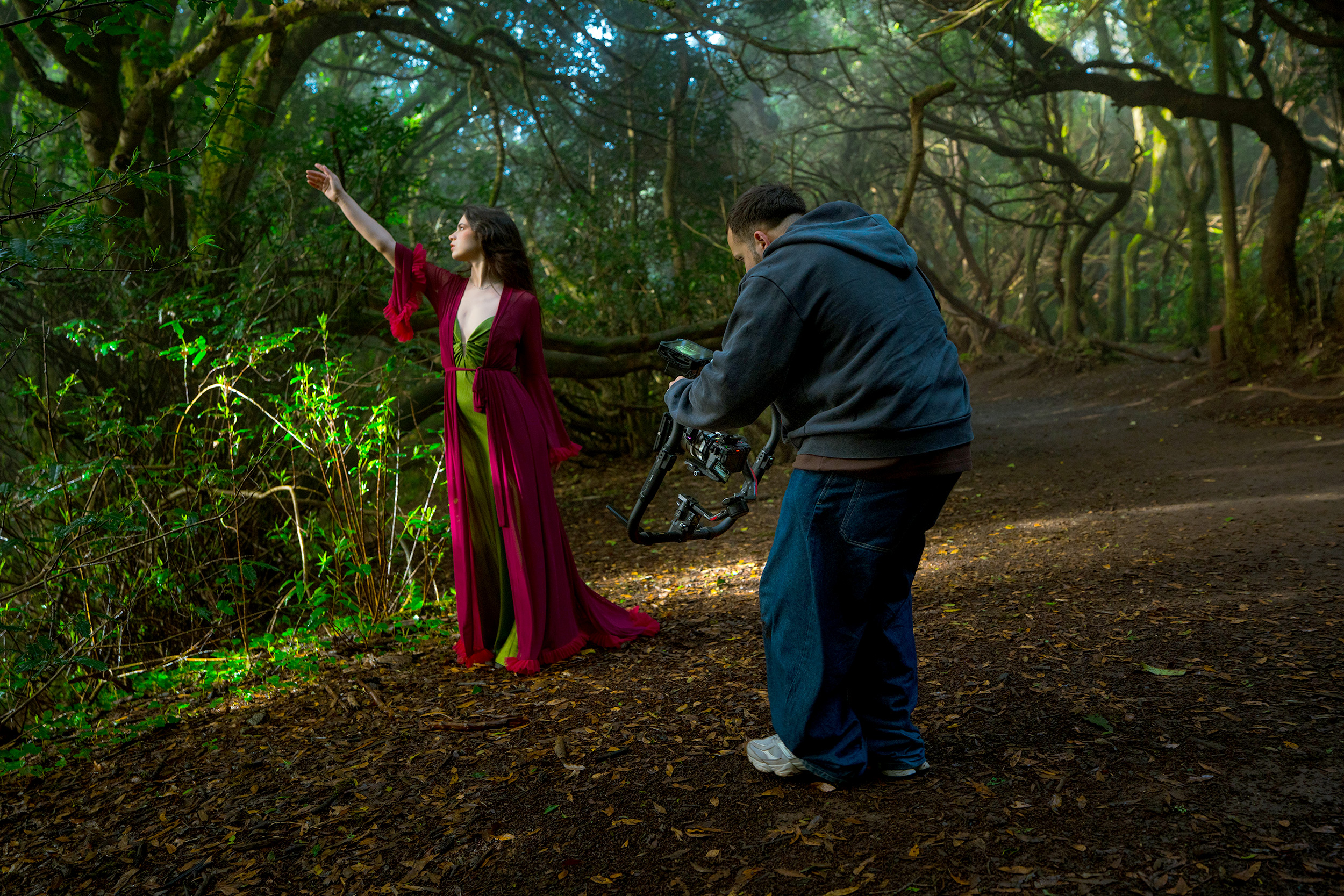
That freedom influenced the structure of the film. I allowed myself to move between very different environments: forest, desert, volcanic landscapes, ocean, rain and an interior manor setup. I also planned more movement than I normally would on such a tight schedule. In Anaga Forest, for example, Marjorie runs through the trees while I follow her with the FX5 stripped down on a DJI RS 4 Pro. The faster readout also gave me confidence for handheld and tracking shots, because I wasn’t constantly worried about rolling shutter.
 © Duncan Bonnifay
How did you keep a consistent look across such different locations?
I didn’t want every location to look the same. The forest, dunes, volcanic rocks, rain and manor all needed their own identity. The film is about crossing emotional worlds, so those differences were important.
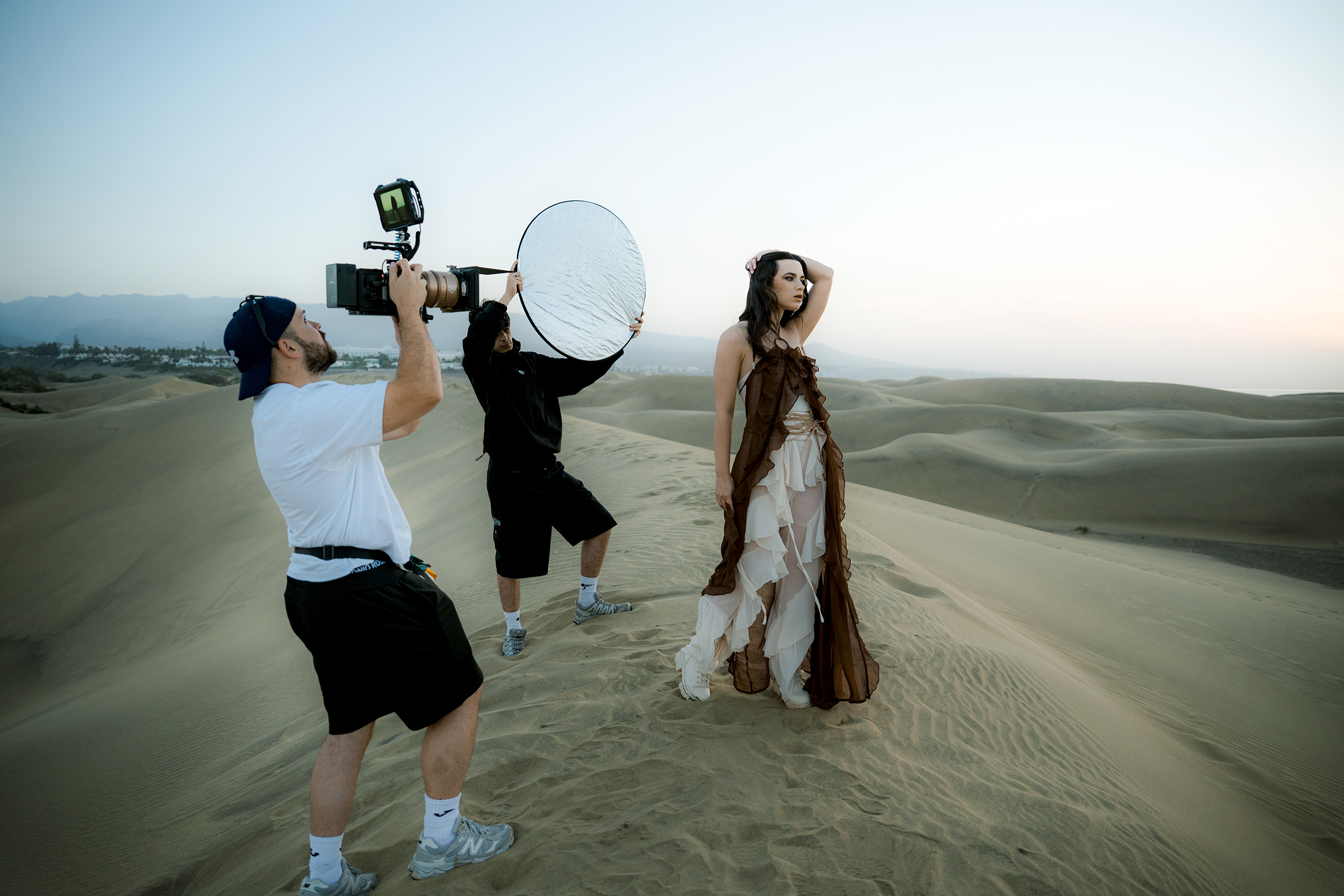
What I wanted to unify was the overall image language: contrast, density, skin tones and the way light interacts with the character. The X-OCN workflow helped a lot because I had enough flexibility in the grade to shape each world while keeping the same cinematic base. On the islands, we mostly shaped natural light with reflectors and mirrors. In the manor, everything was much more controlled, with sources placed outside the windows, but I still tried to keep the softness and contrast connected to the exterior footage.
 © Duncan Bonnifay
How did the new display and EVF help on set?
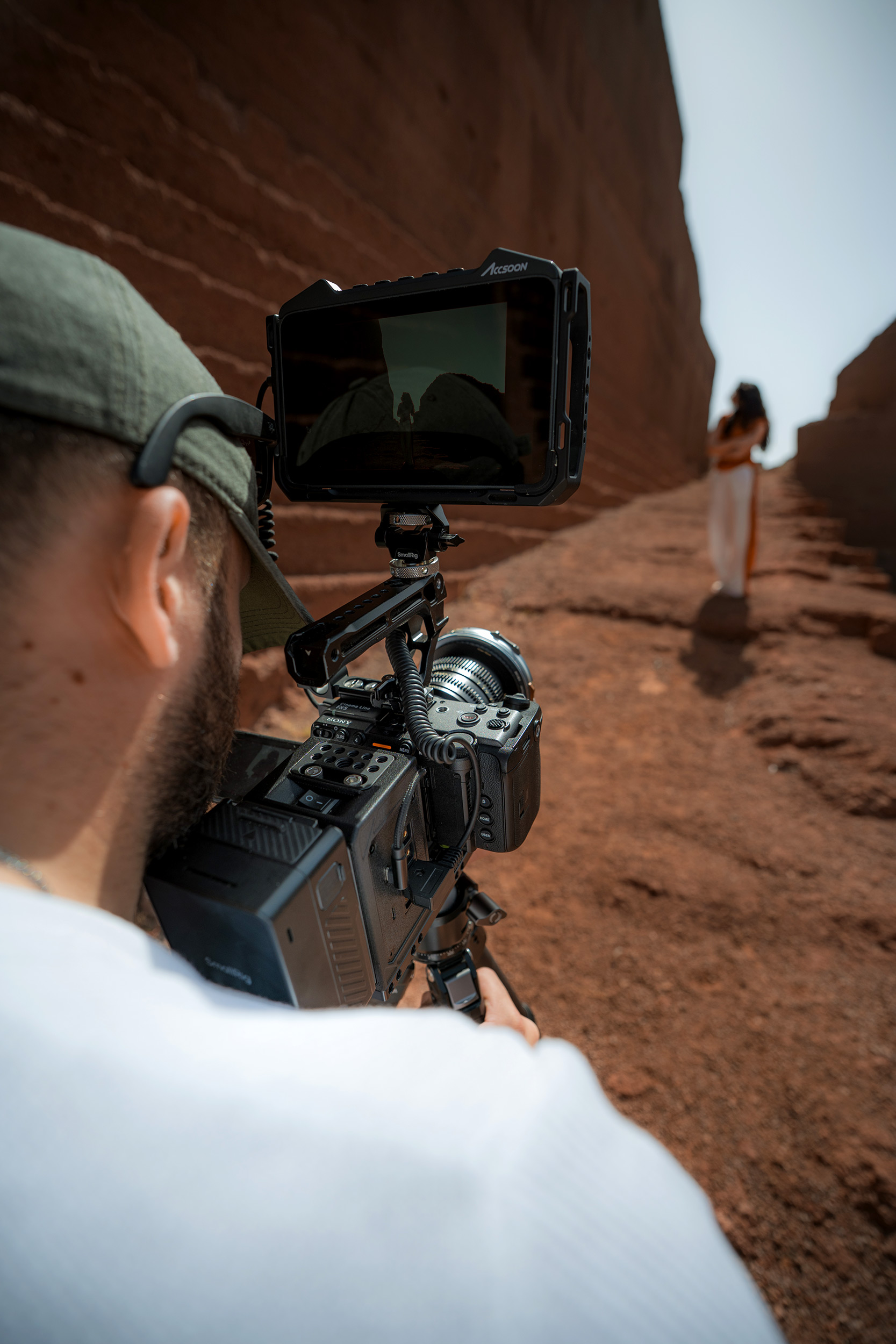
The 3.5-inch 16:9 screen made the camera feel much more practical. We were constantly moving: hiking, running through sand, climbing rocks, shooting in rain and travelling between islands. In those conditions, every accessory matters.
When shooting anamorphic, especially in Open Gate, having proper monitoring and desqueeze support directly in the camera made a big difference. I could frame accurately without building a larger monitoring setup every time. When switching to Sony G Master lenses for more practical shots, the screen also gave me a clean image without making the body feel overloaded.
The detachable EVF became one of the most useful tools of the shoot. In Gran Canaria, especially in the dunes, the light was extremely bright. The sand reflected everything, and my external monitor couldn’t compete with the sun. With the EVF, I could isolate myself from the environment and properly judge framing, exposure and focus. Having false colour and exposure tools available inside the camera was essential in those conditions.
How did the CineAlta-inspired menu affect your workflow?
Coming from the FX3, the FX5 menu felt different at first. There was a learning curve, especially because I was discovering the camera under real production pressure. But once I understood the logic, the cinema-first hierarchy made sense.
The camera felt like a production tool. Exposure tools, monitoring, RAW settings, frame rates and professional options were all part of the natural workflow. Since I didn’t have a dedicated 1st AC, that was very important. I had to operate, expose, frame, manage focus and make fast decisions myself.
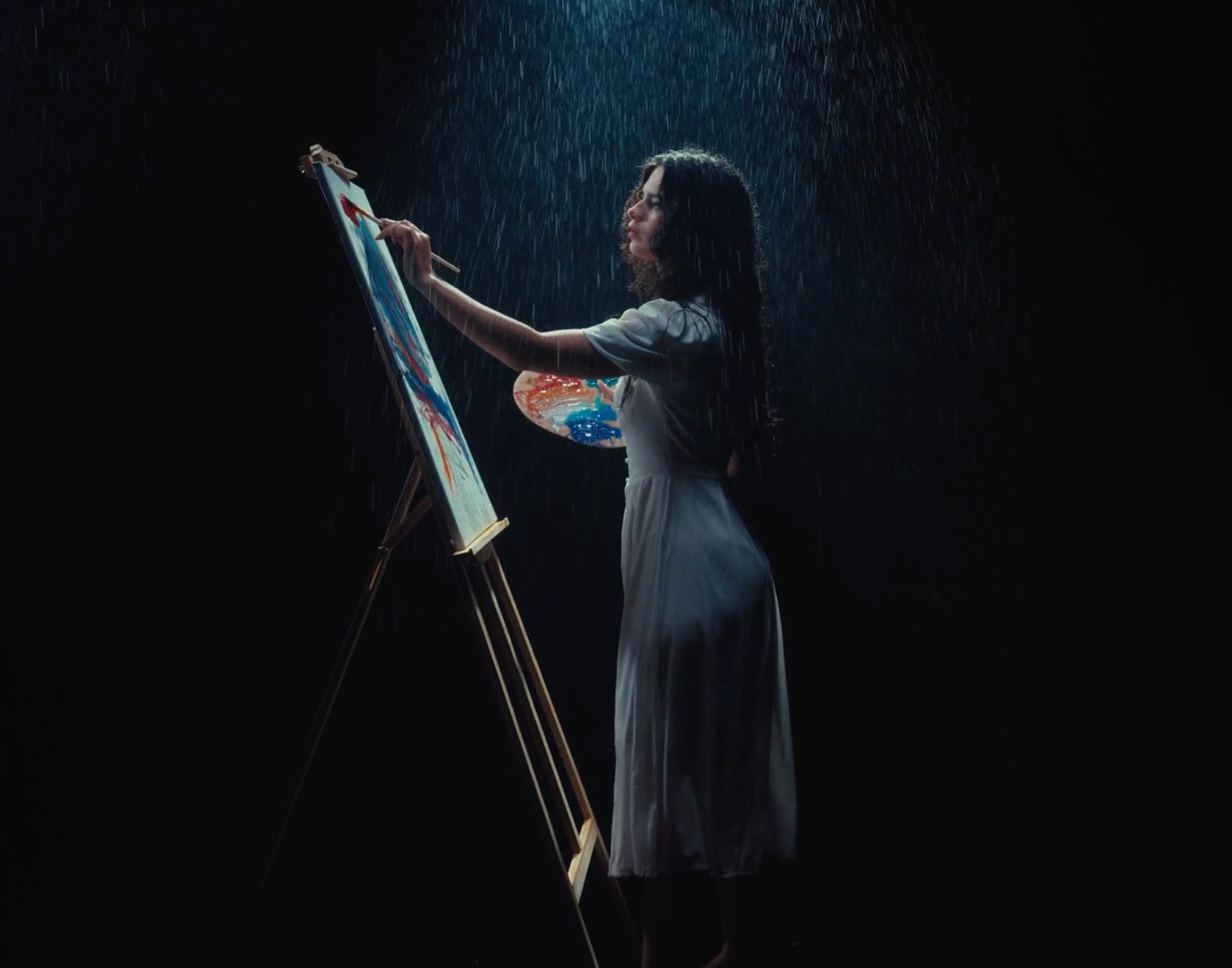
For example, in Las Grietas, I moved between Open Gate and 16:9 to use stabilisation for handheld follow shots without rebuilding the camera. In the rain sequence, I relied heavily on false colour because I wasn’t using an external monitor. Having those tools inside the body saved time and helped me stay focused on the image.
 © Duncan Bonnifay
Why did you choose X-OCN C1?
I shot in X-OCN C1 because it gave me the right balance between quality, flexibility and realistic file sizes. This project was mainly created for YouTube, social media, vertical versions, online marketing and a premiere screening at the Grand Rex theatre. I needed RAW flexibility for grading and exposure adjustments, but I also had to think about storage, backups and editing performance.
When you shoot for almost two weeks across several islands, with slow motion and multiple deliverables, data becomes part of the creative workflow. X-OCN C1 gave me the flexibility I needed without generating unnecessarily massive files. For this kind of release, the visual difference is very hard to notice, but in terms of backup time and drive space, it makes a huge difference.
What was your reaction when grading the footage?
As my own colourist, grading the X-OCN footage was a real pleasure. The film had very different situations: bright desert horizons, deep forests, black volcanic rocks, green water, rain, low light and controlled interiors. The latitude and RAW flexibility gave me room to shape each environment without the image falling apart.
The goal was not to make everything identical, but to make everything belong to the same film. I could recover highlights, control shadows and work on skin tones with confidence. In Lanzarote, we created one shot in almost complete darkness using only a headlamp, a reflector and some atmosphere. Thanks to the camera’s low-light performance and RAW flexibility, the final image felt much bigger than the actual setup.
 © Duncan Bonnifay
How does the FX5 compare to the FX3?
I love the FX3. It has been a huge part of my work because it is small, reliable and easy to move with. But the FX5 feels like a real step toward a compact cinema camera. The image feels denser, the monitoring tools are stronger, and internal X-OCN RAW changes the way you work.
With the FX3, I often build the camera around what I need. With the FX5, many of those cinema tools are already inside the body. It feels less like a mirrorless camera trying to become a cinema camera, and more like a compact cinema camera from the start.
What lens setups did you use?
I kept the lens package minimal because we were travelling and hiking a lot. For the main cinematic work, I used DZO Arles lenses, mainly the 35mm and 50mm, with the 18mm for one top shot in the manor. I also used Thypoch Simera-C lenses for a lighter, more organic feel. For anamorphic work, I used the DZO Arcana lenses, especially in Anaga Forest. For the rain sequence, I switched to the Sony FE 24-70mm f/2.8 GM II because I needed autofocus, weather sealing and speed.
What do you hope viewers feel after watching the film?
I hope they feel something before they think about the camera. Of course, the film was made to show what the FX5 can do, but I didn’t want the technology to be the subject. I wanted light, image and emotion to come first.
My advice to filmmakers is to see the FX5 as a real cinema tool in a compact body. Don’t use every feature just because it exists. Use Open Gate, X-OCN, the EVF, slow motion and autofocus when they serve the story. For me, the strength of the FX5 is that it gives you high-end cinema possibilities while allowing you to stay mobile, fast and intentional. It doesn’t just help you capture an image. It helps you design one.


